
Essential Tips for Perfectly Placing Your Staircase As per Vastu
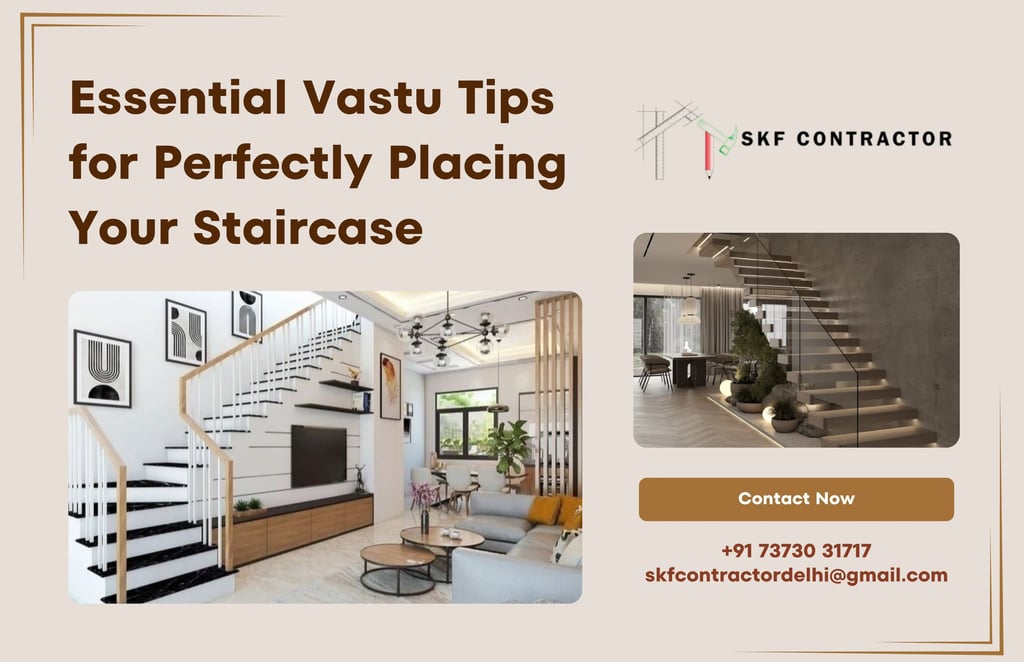
Essential Vastu Tips for Perfectly Placing Your Staircase in Your Home
If you’re going to be regularly running up and down a set of stairs in your home, then you may as well do it properly. Know how to put the staircase in your home correctly, according to Vastu, with these dos and don’ts.
There are a set of Vastu principles for different portions of the house which, when put together, operate in perfect harmony to bring in beneficial energy to your home. Staircases also must follow the principles of Vastu Shastra. Here are essential Vastu rules for a staircase to let the beneficial energies move in.
Summary :-
According to Vastu Shastra, staircases preferably should be in the southwest, south, or west direction and should proceed clockwise for positive energy flow. Don’t put stairs in the northeast or in the center of the house. Light colors, an odd number of steps, and clutter-free surroundings are also regarded as fortunate. SKF Contractor guides homeowners in designing modern stairs that blend Vastu with spectacular interiors.
In This Article:-
Understanding Vastu Shastra and its Importance
Vastu Shastra, an ancient Indian science of architecture and design, is more than just a set of guidelines for construction. It is a profound philosophy that integrates the natural elements, cosmic energies, and the physical environment to create a harmonious living space. Rooted in the belief that the universe is composed of five basic elements—earth, water, fire, air, and space—Vastu Shastra aims to balance these elements within our homes and workplaces. By aligning our spaces with these principles, we can enhance health, prosperity, and overall well-being.
The importance of Vastu Shastra in modern architecture is growing as more people recognize the benefits of living in a space that is in harmony with natural laws. This ancient wisdom, which dates back thousands of years, provides practical solutions for contemporary living. It includes the layout and orientation of buildings and the placement of elements within the structure, such as doors, windows, furniture, and staircases. When applied correctly, Vastu Shastra can transform a building into a nurturing and supportive environment.
Understanding the significance of Vastu Shastra is the first step in creating a balanced living space. This ancient science emphasizes the importance of energy flow within a building. Positive energy, or "prana," should be allowed to circulate freely, while negative energy must be minimized. By adhering to Vastu principles, we can create spaces that are not only aesthetically pleasing but also energetically balanced, promoting physical and mental health. This holistic approach to design and architecture is what makes Vastu Shastra a timeless and invaluable tool for modern living.
The Role of Staircases in Vastu
Staircases play a crucial role in Vastu Shastra as they are considered to be significant conduits for energy flow within a home. They are not merely structural elements that connect different levels of a building; they also have a profound impact on the distribution and movement of energy. According to Vastu principles, the placement and design of staircases can influence the overall harmony and balance of a home. Therefore, it is essential to pay close attention to their positioning and construction.
In Vastu Shastra, staircases are believed to have the potential to either enhance or disrupt the energy flow within a home. When placed and designed correctly, they can facilitate the smooth movement of positive energy, ensuring that all areas of the home are infused with vitality and dynamism. Conversely, poorly placed or designed staircases can create blockages and imbalances, leading to negative energy accumulation and various issues for the occupants. This underscores the importance of following Vastu guidelines for staircase placement and design.
Moreover, staircases are also associated with the element of fire in Vastu Shastra. This association further emphasizes the need for careful consideration of their placement, as the fire element can have both positive and negative effects on the energy dynamics of a home. By adhering to Vastu principles, homeowners can ensure that their staircases contribute to a balanced and harmonious living environment. This, in turn, can lead to improved health, prosperity, and overall well-being for the occupants.
Key Principles of Staircase Placement
When it comes to placing staircases according to Vastu Shastra, several key principles must be observed to ensure optimal energy flow and balance within the home. The first principle is the directional orientation of the staircase. Vastu Shastra recommends that staircases should ascend from east to west or north to south. This alignment is believed to promote the natural flow of positive energy and prevent the accumulation of negative energy.
Another important principle is the location of the staircase within the home. According to Vastu Shastra, staircases should ideally be placed in the southern or western parts of the building. These directions are considered to be more suitable for staircases as they are associated with stability and strength. Placing staircases in the north or east is generally discouraged, as it can lead to energy imbalances and various issues for the occupants.
Additionally, Vastu Shastra emphasizes the importance of avoiding certain placements for staircases. For instance, staircases should never be located in the center of the home, as this area is considered to be the "Brahmasthan" or the sacred center. Placing a staircase in this area can disrupt the energy flow and create imbalances. Similarly, staircases should not be placed directly in front of the main entrance, as this can obstruct the smooth flow of energy into the home. By adhering to these key principles, homeowners can ensure that their staircases contribute to a harmonious and balanced living environment.
Directional Guidelines for Staircase As per Vastu
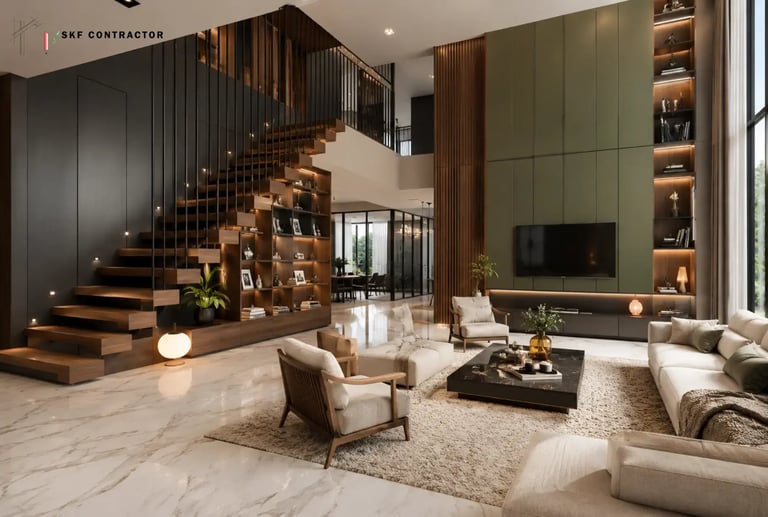
The most favorable position for the staircase in your house is near the entrance. According to the principles of Vastu, the south-west part of the house is the optimum direction for an internal staircase, followed by the south and west directions. These regulations apply to east-facing, north-facing, and west-facing houses. If it is a south-facing residence, an internal staircase can be in the south/south-east or west/north-west part of the house. But in the case of all residences, do not have stairs in the northeast portion of the house.
Placement Guidelines for Staircase As per Vastu
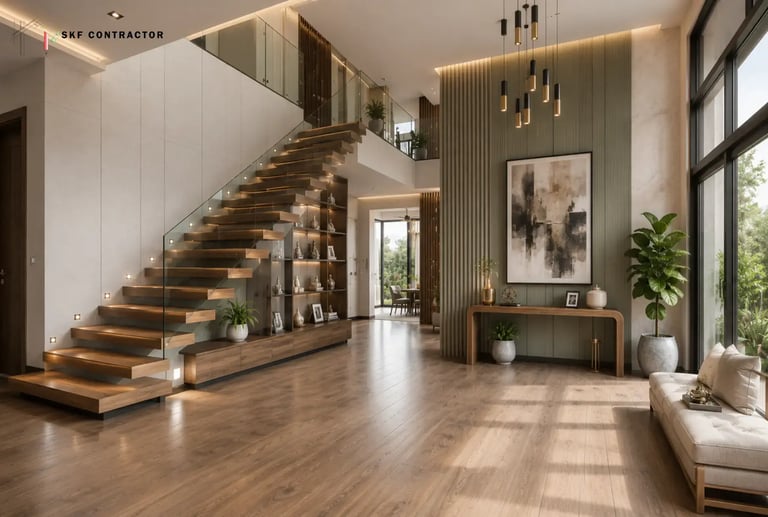
An internal staircase should never be in the middle of your property. According to Vastu Shastra scholars, the kitchen, storeroom, or pooja room should never be at the beginning or end of an interior staircase. Nor should the staircase be located so that it is immediately visible to a visitor. The stairway from the cellar to the floor above should not be extended to link to the upper stories. Experts also suggest that the staircase should not be located right at the front door where the higher floors are rented out. Such an arrangement, it is said, causes financial losses to the owners.
Orientation Guidelines for Staircase As per Vastu
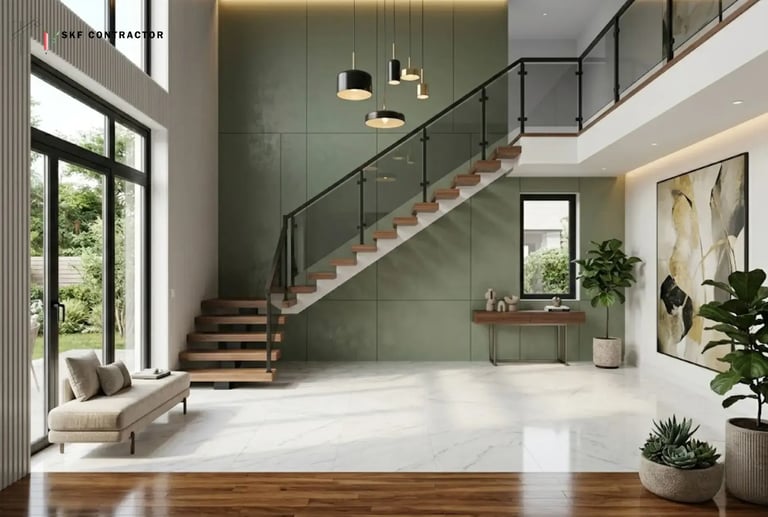
As per the experts, the staircase of your house should always be in the clockwise orientation, i.e., either from north to south or from east to west. The fact is, an anti-clockwise oriented staircase causes problems for career progress.
Ideal Shapes and Sizes for Staircases
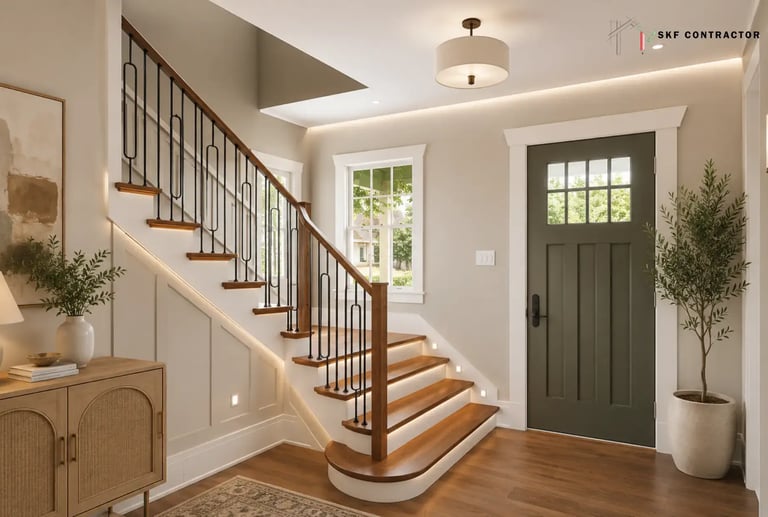
The shape and size of a staircase play a crucial role in determining its impact on the energy dynamics of a home. According to Vastu Shastra, certain shapes and sizes are more conducive to positive energy flow and balance. One of the most recommended shapes for staircases is the rectangular or straight shape. This shape is considered to be the most stable and harmonious, allowing for a smooth flow of energy between different levels of the home.
Another favorable shape for staircases in Vastu Shastra is the L-shaped or U-shaped design. These shapes are believed to promote stability and support, while also allowing for efficient use of space within the home. Spiral staircases, on the other hand, are generally discouraged in Vastu Shastra. They are considered to create a vortex of energy that can lead to imbalances and disruptions in the overall energy flow of the home. If a spiral staircase is unavoidable, certain remedies can be applied to mitigate its negative effects.
The size of the staircase is equally important in Vastu Shastra. Staircases should be proportionate to the size of the home and should not be too steep or too narrow. A well-proportioned staircase ensures that energy flows smoothly and consistently between different levels of the home. Additionally, the number of steps in a staircase should ideally be odd, as odd numbers are considered to be more auspicious in Vastu Shastra. By adhering to these guidelines for the shape and size of staircases, homeowners can create a balanced and harmonious living environment.
Vastu Tips For External Staircases
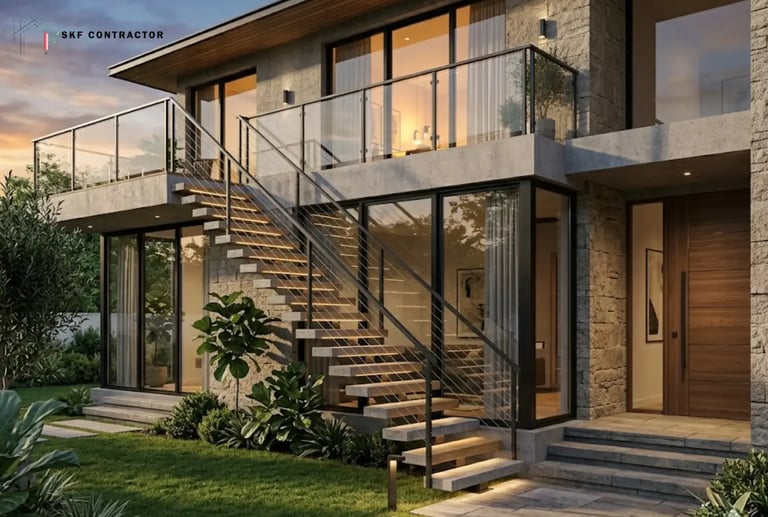
When it comes to external staircases, they can be built either in:
The south-east part of the property while facing the east.
The south-west part of the property while facing the west or south.
The north-west part of the property while facing the north.
Odd Number Of Steps
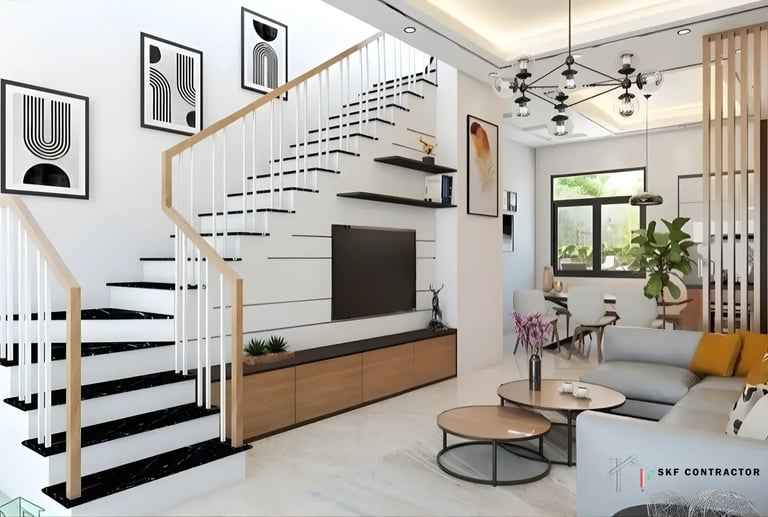
Vastu experts say staircases should always have an odd number of steps. This is because normally a person starts ascending stairs with the right leg, and according to shastra, if the climb concludes on the right foot also, it is considered auspicious. This highlights the importance of having an odd number of steps.
Choose The Right Colours As Per Staircase Vastu
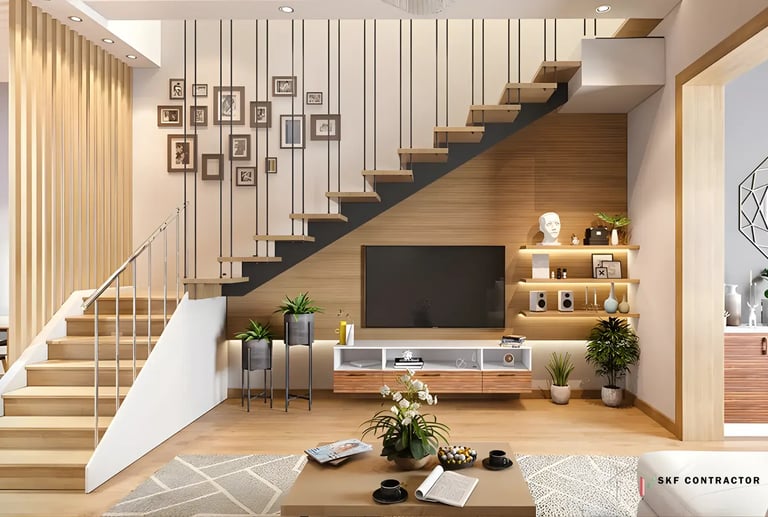
The greatest colour options for your staircase design and surrounds should be lighter versions of the colours you go for. No dark colours to be used around staircases. You can also choose a beautiful wallpaper near the staircase; that should be in a light colour shade.
Under The Stairs
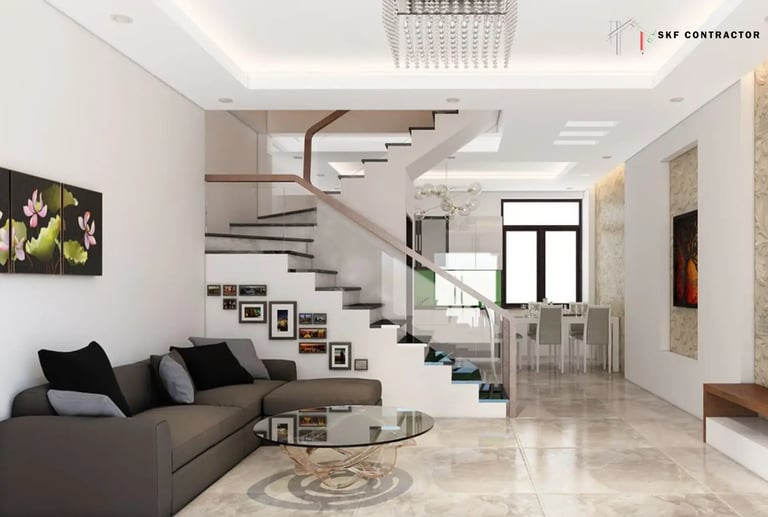
The Dursleys may have kept Harry Potter in a cupboard under the stairs, but we all know how that went! Use the area under the stairs only, if at all, to create storage space for regularly used items or inexpensive objects in the house. The space below the stairs should not be used for storing valuables or as a tiny study room, pooja room, or something of that nature. And don’t use the space under the stairs as a place to hide away junk.
Common Mistakes to Avoid in Staircase Placement
While following Vastu principles for staircase placement can greatly enhance the energy dynamics of a home, it is equally important to be aware of common mistakes that should be avoided. One of the most frequent mistakes is placing a staircase directly in front of the main entrance. This placement can obstruct the smooth flow of energy into the home and create a sense of imbalance. It is advisable to position the staircase away from the main entrance to ensure a harmonious energy flow.
Another common mistake is placing a staircase in the center of the home, known as the Brahmasthan. This area is considered to be the most sacred and energetically significant part of the home. Placing a staircase in the Brahmasthan can disrupt the balance and harmony of the space, leading to various issues for the occupants. It is best to keep this area free from any major structural elements, including staircases.
Additionally, it is important to avoid placing staircases in the northeast direction of the home. This direction is associated with the element of water and is considered to be a sacred area in Vastu Shastra. Placing a staircase in the northeast can lead to energy imbalances and various problems for the occupants. By being mindful of these common mistakes and adhering to Vastu guidelines, homeowners can ensure that their staircases contribute positively to the overall energy dynamics of their home.
Enhancing Positive Energy around Staircases
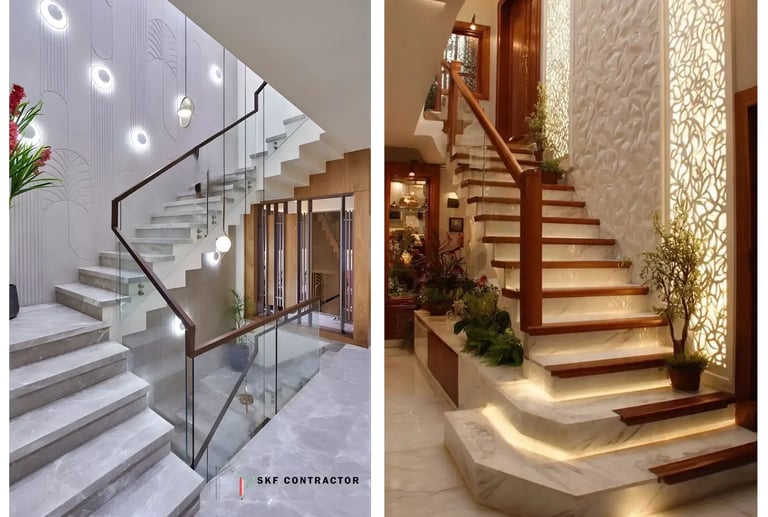
In Vastu Shastra, it is not only the placement and design of staircases that matter but also the energy surrounding them. Enhancing positive energy around staircases can further contribute to a harmonious and balanced living environment. One effective way to achieve this is by ensuring that the staircase is well-lit. Proper lighting can enhance the flow of positive energy and create a welcoming and uplifting atmosphere.
Another way to enhance positive energy around staircases is by incorporating natural elements. Placing indoor plants or decorative items made from natural materials near the staircase can help balance the energy and create a sense of harmony. Additionally, using calming colors for the staircase and its surrounding area can also promote positive energy. Colors such as white, light blue, and green are considered to be soothing and can enhance the overall energy dynamics of the space.
It is also important to keep the staircase clean and clutter-free. A cluttered staircase can obstruct the flow of energy and create a sense of chaos and imbalance. Regular cleaning and maintenance of the staircase can ensure that positive energy flows smoothly and consistently. By incorporating these practices, homeowners can enhance the positive energy around their staircases and create a more balanced and harmonious living environment.
Vastu Remedies for Existing Staircase Issues
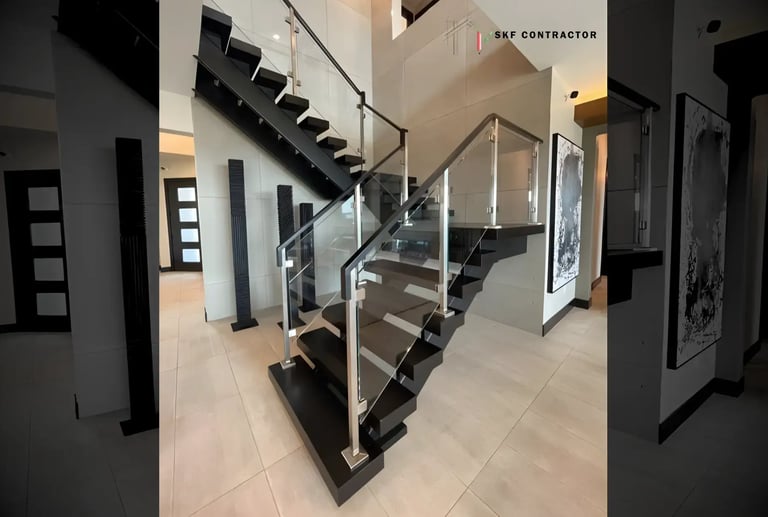
For homeowners who already have staircases that do not comply with Vastu principles, there are several remedies that can be applied to mitigate any negative effects. One common remedy is the use of mirrors. Placing a mirror at the base of the staircase can help deflect negative energy and enhance the flow of positive energy. It is important to ensure that the mirror is placed in a way that does not reflect the main entrance or any other important areas of the home.
Another effective remedy is the use of Vastu pyramids. Placing a Vastu pyramid near the staircase can help balance the energy and neutralize any negative effects. Vastu pyramids are considered to be powerful tools for enhancing positive energy and creating a harmonious environment. They can be made from various materials, including copper, crystal, and stone, and should be placed with careful consideration of their orientation and placement.
Additionally, incorporating natural elements such as indoor plants and decorative items made from natural materials can also help balance the energy around a staircase. Plants are known for their ability to purify the air and enhance positive energy. Placing them near the staircase can create a sense of harmony and balance. By applying these Vastu remedies, homeowners can address any existing staircase issues and create a more positive and harmonious living environment.
The Impact of Staircase Design on Home Energy
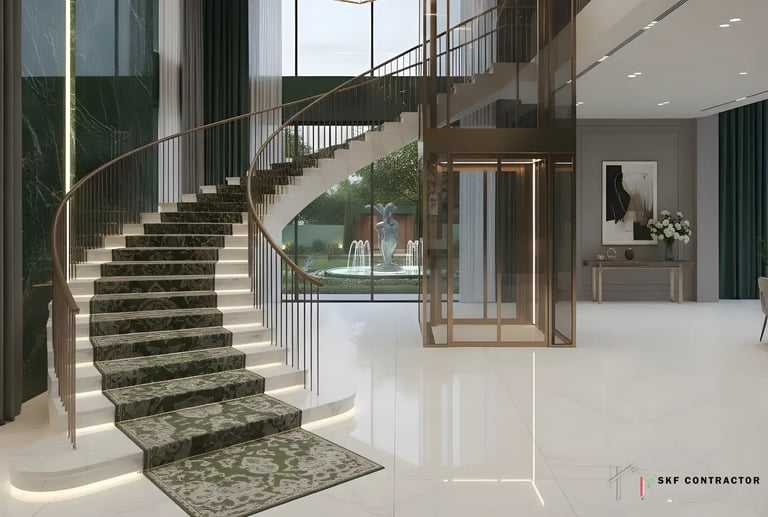
The design of a staircase can have a profound impact on the energy dynamics of a home. According to Vastu Shastra, the design should not only be aesthetically pleasing but also align with the principles of balance and harmony. A well-designed staircase can enhance the flow of positive energy and create a sense of stability and support within the home. Conversely, a poorly designed staircase can lead to energy imbalances and various issues for the occupants.
One important aspect of staircase design is the material used. Natural materials such as wood, stone, and metal are considered to be more conducive to positive energy flow in Vastu Shastra. These materials are associated with stability and grounding and can enhance the overall energy dynamics of the home. It is also important to ensure that the staircase is sturdy and well-maintained, as a damaged or unstable staircase can create negative energy and disrupt the harmony of the space.
Another important aspect of staircase design is the incorporation of natural elements and colors. Using calming colors such as white, light blue, and green can enhance the flow of positive energy and create a sense of tranquility and harmony. Additionally, incorporating natural elements such as indoor plants and decorative items made from natural materials can further enhance the energy dynamics of the staircase and its surrounding area. By paying attention to these design aspects, homeowners can ensure that their staircases contribute positively to the overall energy dynamics of their home.
How Can SKF Contractor Help You?
At SKF Contractor, we create elegant and Vastu-compliant staircases that bring in positivity, harmony, and usefulness to your home. From ideal staircase placement and clockwise direction to modern designs and space optimization and anything else, our professionals leave no stone unturned to ensure that every staircase is Vastu compliant and suits your interior style. Whether you are building new or upgrading, we create staircase solutions that are practical, stylish, and energy-balanced.
Conclusion: Achieving Harmony with Vastu Principles
In conclusion, the placement and design of staircases play a crucial role in the overall energy dynamics of a home. By following the principles of Vastu Shastra, homeowners can ensure that their staircases contribute positively to the balance and harmony of their living environment. From understanding the importance of directional guidelines and ideal shapes and sizes to avoiding common mistakes and enhancing positive energy, there are various aspects to consider when placing and designing staircases according to Vastu principles.
Furthermore, for those who already have staircases that do not comply with Vastu guidelines, there are several remedies that can be applied to mitigate any negative effects. By incorporating natural elements, using Vastu pyramids, and ensuring proper lighting, homeowners can enhance the positive energy around their staircases and create a more harmonious living environment.
Ultimately, the principles of Vastu Shastra provide a holistic approach to architecture and design, emphasizing the importance of balance and harmony in our living spaces. By adhering to these principles, homeowners can create a nurturing and supportive environment that promotes health, prosperity, and overall well-being. Whether building a new home or making adjustments to an existing one, the wisdom of Vastu Shastra offers valuable insights and practical solutions for achieving harmony and positive energy in our living spaces.
1. How important is the lighting of a staircase according to Vastu Shastra?
According to Vastu Shastra, lighting a staircase is a very important feature for establishing a positive and harmonious environment in a house. Try to incorporate windows to let in ample natural light in the staircase area. If you use artificial light, use gentle and warm lights, and place them on the walls rather than the ceiling. The stairs should always be brightly lit for the sake of safety, security, and well-being.
2. How can the placement of handrails affect the energy in a home according to Vastu Shastra?
Handrails are an important part of stairs since they provide support and stability. According to Vastu Shastra, the direction of handrails used in staircases might alter the energy flow in your house. To ensure proper energy flow, the railing should be on the right when going up and the left when going down.
3. What are the recommended colours for a staircase, according to Vastu Shastra?
Light colours are advised for staircases by Vastu Shastra experts since they provide freshness and positive energy into the environment. Light colors are relaxing, while vivid colors send out strong energies. As per Vastu Shastra, you should choose off-white, light grey, light blue, yellow, baby pink, and other pastel colours for the staircase.
4. What are the preferred materials for a staircase according to Vastu Shastra?
The best materials for a staircase are primarily determined by the direction of the staircase in the house. According to Vastu Shastra, the staircase in the north or east orientations should be created in marble and granite. Wood, concrete, and stone are all excellent materials for a staircase facing south or west.
5. Is it important to have a landing in a staircase according to Vastu Shastra?
Vastu Shastra says, "Yes, it is vital and important to have a landing in a staircase." A landing creates a pause in the stairway, allowing energy to concentrate and then dissipate in a more balanced manner. A landing also helps to reorient the staircase, which is very useful because stairs that go on in the same direction for too long are supposed to produce negative energy.
6. Can a staircase be modified according to Vastu Shastra principles after it has been built?
Yes, a built staircase can be corrected as per Vastu. Changing an existing stairwell can improve the energy flow. Changing the color and lighting of a staircase is easy, but changing the direction and adding a landing can be expensive and should be done only after consultation with a Vastu Shastra specialist.
FAQs
CONTACT US
C-158A, Street No.2, Chattarpur Enclave, Ph-2, 100ft Road New Delhi, Delhi 110074
+91 73730 31717
ADDRESS
SKF Contractor @2026 All Rights Reserved.
QUICK LINKS
Our Popular Services:
Interior Designer | Office Interior Design | Modular Kitchen | Living Room Interior Design | Bedroom Interior Design | Salon Interior Design | Jewellery Shop Interior Design | Showroom Interior Design | Apartment Interior Design | Home Interior Design | Commercial Interior Design | Villa Interior Design | Turnkey Interior Design | Kids Room Interior Design
Our Recent Projects:
Manish Bhasin's 2BHK | Puneet Agarwal's 3BHK | Parth Sarthi's 3BHK | Aarpit Jaiswal's 3BHKs | Bhawna Gupta's 2BHK | Amit Vaid's News Channel | Delta Export's Office | Avyukta Corporate Solution's
Our Service Locations:
Delhi:-
Interior Designer in Delhi | Interior Designer in South Delhi | Interior Designer in East Delhi | Interior Designer in Central Delhi | Interior Designer in Dwarka | Interior Designer in Dwarka Expressway | Interior Designer in Rohini | Interior Designer in Pitampura | Interior Designer in Janakpuri | Interior Designer in Vasant Kunj | Interior Designer in Saket | Interior Designer in Greater Kailash 1 | Interior Designer in Greater Kailash 2 | Interior Designer in South Extension | Interior Designer in Chattarpur | Interior Designer in Mayur Vihar | Interior Designer in Preet Vihar | Interior Designer in Punjabi Bagh | Interior Designer in Rajouri Garden | Interior Designer in Model Town | Interior Designer in Civil Lines | Interior Designer in Jasola | Interior Designer in Sarita Vihar | Interior Designer in Connaught Place | Interior Designer in Okhla |
Gurgaon / Gurugram:-
Interior Designer in Gurugram | Interior Designer in Sohna Road | Interior Designer in Manesar | Interior Designer in Golf Course Road | Interior Designer in Ambience Island | Interior Designer in DLF Phases | Interior Designer in DLF Phase 1 | Interior Designer in DLF Phase 2 | Interior Designer in DLF Phase 3 | Interior Designer in DLF Phase 4 | Interior Designer in DLF Phase 5 | Interior Designer in DLF the Camellias | Interior Designer in DLF the Magnolias | Interior Designer in Nirvana Country | Interior Designer in MG Road | Interior Designer in Gurgaon Sector 30 | Interior Designer in Gurgaon Sector 37D | Interior Designer in Gurgaon Sector 49 | Interior Designer in Gurgaon Sector 81
Faridabad:-
Interior Designer in Faridabad | Interior Designer in Green Fields | Interior Designer in Surajkund | Interior Designer in Faridabad Sector 9 | Interior Designer in Faridabad Sector 10 | Interior Designer in Faridabad Sector 15 | Interior Designer in Faridabad Sector 17 | Interior Designer in Faridabad Sector 19 | Interior Designer in Faridabad Sector 21C | Interior Designer in Faridabad Sector 28 | Interior Designer in Faridabad Sector 30 | Interior Designer in Faridabad Sector 31 | Interior Designer in Faridabad Sector 46
Ghaziabad:-
Interior Designer in Ghaziabad | Interior Designer in Indirapuram | Interior Designer in Vaishali | Interior Designer in Vasundhra | Interior Designer in Raj Nagar Extension | Interior Designer in Kavi Nagar | Interior Designer in Crossings Republik | Interior Designer in Shastri Nagar | Interior Designer in Nehru Nagar | Interior Designer in Kaushambi | Interior Designer in Sahibabad | Interior Designer in Mohan Nagar | Interior Designer in Lohia Nagar | Interior Designer in Govindpuram | Interior Designer in Lal Kuan | Interior Designer in Wave City
Noida:-
Interior Designer in Noida | Interior Designer in Noida Extension | Interior Designer in Noida Sector 18 | Interior Designer in Noida Sector 44 | Interior Designer in Noida Sector 62 | Interior Designer in Noida Sector 75 | Interior Designer in Noida Sector 76 | Interior Designer in Noida Sector 104 | Interior Designer in Noida Sector 128 | Interior Designer in Noida Sector 137 | Interior Designer in Noida Sector 142 | Interior Designer in Noida Sector 150
Greater Noida:-
Interior Designer in Greater Noida | Interior Designer in Pari Chowk | Interior Designer in Greater Noida West | Interior Designer in Alpha 1 | Interior Designer in Alpha 2 | Interior Designer in Beta 1 | Interior Designer in Beta 2 | Interior Designer in Gamma 1 | Interior Designer in Gamma 2 | Interior Designer in Delta 1 | Interior Designer in Delta 2 | Interior Designer in Omega 1 | Interior Designer in Omega 2 | Interior Designer in Zeta 1 | Interior Designer in Zeta 2 | Interior Designer in Greater Noida Sector 36 | Interior Designer in Knowledge Park 1 | Interior Designer in Knowledge Park 2 | Interior Designer in Knowledge Park 3 | Interior Designer in Knowledge Park 4 | Interior Designer in Techzone 4