
Difference Between Aluminum vs UPVC Windows
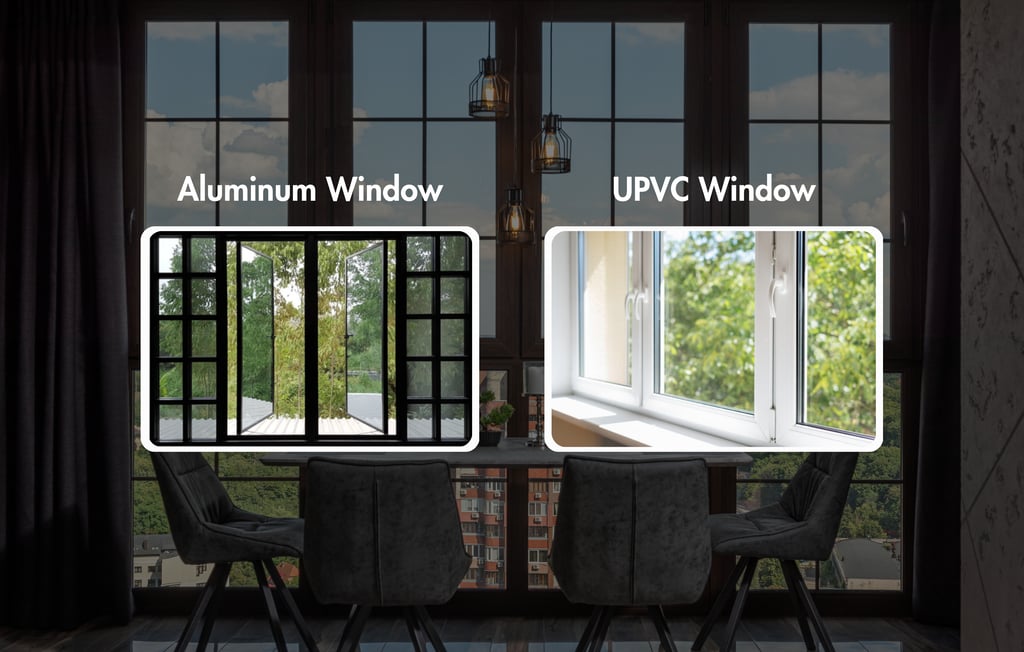
Difference Between UPVC and Aluminum Windows?
Both commercial and residential buildings feature wall openings that allow fresh air and light to enter. Aluminum is the most commonly used material in commercial buildings in India; however, residential buildings can be made of wood, steel, UPVC, or aluminum.
Aluminum and UPVC are the two most common materials used nowadays for residential windows. Aluminum has long been used in India for high-rise buildings, while UPVC has proven popular in cold climes. It is used in conjunction with double or triple glass. Hence It is commonly referred to as vinyl windows or energy-efficient windows. This note will compare the two options to see which is better and more appropriate for you.
Differences Between UPVC and Aluminum Windows
Modern aluminum windows are called 'System Windows', and they are tested for safety in adverse weather conditions. The following is a comparison between System Aluminum Windows and UPVC Windows.
1. Popularity:
Aluminum windows are expected to have more than 50% market share in India. The percentage of UPVC windows may be between 15 and 18%. Because aluminum is a metal, it is generally thought to be more expensive than a UPVC window, which is constructed of plastic. Aluminium windows in high-end buildings stand out due to their brilliant colors, as opposed to UPVC, which is typically white.
2. Strength for facing heavy winds:
The UPVC plastic window is strengthened by placing a steel reinforcement inside the window profile. The larger the steel portion, the stronger the window. On the other hand, it bulks up the window and lowers the amount of light that may enter. The steel sections are kept 6" short since the corners must be welded to make a frame. This makes corners extremely weak; therefore, UPVC cannot be used for high-rise buildings or to create the larger windows necessary in luxury housing.
Aluminum, as a metal, can be engineered to face varying wind pressures based on the location of the building, such as the seafront. It is also possible to resist wind pressure using pieces of varying thicknesses. The corners are mechanically linked, which makes transportation easier than welded UPVC frames, which cannot be carried up a staircase.
3. Durability and ease of use:
UPVC is a plastic material, and direct sunlight (UV rays) is its enemy. Sunlight brittles the window and fades color to yellow. This problem becomes more significant if the supplier reduces the dosage of TiO2, which is required to extend product life. This is tough to determine because all new windows appear white. The quality of hardware has an equal impact on the lifespan of the window. Hardware elements such as rollers and lock-keeps are constructed of steel and are more susceptible to corrosion, particularly in coastal environments. Locks are not securely fastened because the screw is inserted into plastic portions.
Aluminum is a stronger and more lasting substance. It is polished and treated with a weather-resistant coating to prevent corrosion in coastal areas. The lock is fixed to metal, which is considerably better. UV has less effect on aluminum, and its usable life is significantly longer in a tropical country like India. There are fewer steel elements utilized, and the window lasts longer.
The rollers in aluminum windows are substantially larger than those in UPVC, making them easier to operate. It is easier to install accessories such as a door closure and a child safety catch. The bottom aluminum frame can be flush with the floor, making it safer for the elderly and children.
4. Design Freedom:
Architects favor aluminum windows for their thin design and larger selection of product alternatives. Designs range in price from low to expensive, and they cater to a variety of architectural types and weather conditions.
The product variety for UPVC is more limited because of the difficulties of installing hardware and dimension limitations. UPVC is ideal for small windows like those seen in Europe, where light and fresh air are required. However, architecture in India is shifting toward larger windows to allow for higher ceiling heights, more use of balconies, easy access to the garden, and nighttime house safety.
5. Weather Resistance:
UPVC offers a significant advantage in extremely cold areas since the plastic material prevents cold from entering the room. In hotter climes, this feature is less useful because reflecting glass plays a larger role in keeping direct sunlight out of the room. With larger UPVC windows, the frame tends to deflect at the corners, reducing weather resistance.
In a tropical climate like India, performance requirements include resistance to monsoon winds (2/3 of India is coastal). System Windows do this more efficiently because they are built to operate with superior gaskets to prevent the intrusion of water, dust, and pollutants. Whistling noise in high-rise buildings is avoided with effective System Windows, and rainwater is easily drained through the bottom track.
6. Noise Ingress Prevention:
The noise performance of windows is determined by the number of air gaps and the overall manufacturing quality. Gaskets are used to close air gaps in aluminum, while wool piles in UPVC tend to crush and become less effective. Glass contributes much to noise reduction. Laminated glass performs better than basic double glass. The highest amount of noise reduction can be attained by employing laminated double glass with different thicknesses.
7. Color choices:
The most common color for UPVC is white. Wood finish alternatives are available, but the cost is significantly higher. Aluminum is always available in color, which improves the building's appearance from the outside and complements curtains and carpets.
8. Maintenance:
It's easy to argue that white UPVC is more difficult to maintain. Aluminum windows with Texguard are easier to clean. The finish has been tested for lifetime use, so there is no need to paint. The hardware does not rust, and maintenance is nearly nonexistent.
9. Cost:
Aluminum windows are less expensive in the long run than high-quality UPVC with a high TiO2 content. The product selection for aluminum windows is substantially larger, depending on the design and strength needs. Luxury choices and larger windows are more expensive because greater pieces are required.
Conclusion:
The market is quickly turning in favor of System Aluminum, which is a'safe to use' product in any weather circumstance. Architects favor aluminum because of its fit and finish, safety and convenience of use, and low maintenance requirements. The design freedom and thin design enhance the building's beauty.
CONTACT US
C-158A, Street No.2, Chattarpur Enclave, Ph-2, 100ft Road New Delhi, Delhi 110074
+91 73730 31717
ADDRESS
SKF Contractor @2026 All Rights Reserved.
QUICK LINKS
Our Popular Services:
Interior Designer | Office Interior Design | Modular Kitchen | Living Room Interior Design | Bedroom Interior Design | Salon Interior Design | Jewellery Shop Interior Design | Showroom Interior Design | Apartment Interior Design | Home Interior Design | Commercial Interior Design | Villa Interior Design | Turnkey Interior Design | Kids Room Interior Design
Our Recent Projects:
Manish Bhasin's 2BHK | Puneet Agarwal's 3BHK | Parth Sarthi's 3BHK | Aarpit Jaiswal's 3BHKs | Bhawna Gupta's 2BHK | Amit Vaid's News Channel | Delta Export's Office | Avyukta Corporate Solution's
Our Service Locations:
Delhi:-
Interior Designer in Delhi | Interior Designer in South Delhi | Interior Designer in East Delhi | Interior Designer in Central Delhi | Interior Designer in Dwarka | Interior Designer in Dwarka Expressway | Interior Designer in Rohini | Interior Designer in Pitampura | Interior Designer in Janakpuri | Interior Designer in Vasant Kunj | Interior Designer in Saket | Interior Designer in Greater Kailash 1 | Interior Designer in Greater Kailash 2 | Interior Designer in South Extension | Interior Designer in Chattarpur | Interior Designer in Mayur Vihar | Interior Designer in Preet Vihar | Interior Designer in Punjabi Bagh | Interior Designer in Rajouri Garden | Interior Designer in Model Town | Interior Designer in Civil Lines | Interior Designer in Jasola | Interior Designer in Sarita Vihar | Interior Designer in Connaught Place | Interior Designer in Okhla |
Gurgaon / Gurugram:-
Interior Designer in Gurugram | Interior Designer in Sohna Road | Interior Designer in Manesar | Interior Designer in Golf Course Road | Interior Designer in Ambience Island | Interior Designer in DLF Phases | Interior Designer in DLF Phase 1 | Interior Designer in DLF Phase 2 | Interior Designer in DLF Phase 3 | Interior Designer in DLF Phase 4 | Interior Designer in DLF Phase 5 | Interior Designer in DLF the Camellias | Interior Designer in DLF the Magnolias | Interior Designer in Nirvana Country | Interior Designer in MG Road | Interior Designer in Gurgaon Sector 30 | Interior Designer in Gurgaon Sector 37D | Interior Designer in Gurgaon Sector 49 | Interior Designer in Gurgaon Sector 81
Faridabad:-
Interior Designer in Faridabad | Interior Designer in Green Fields | Interior Designer in Surajkund | Interior Designer in Faridabad Sector 9 | Interior Designer in Faridabad Sector 10 | Interior Designer in Faridabad Sector 15 | Interior Designer in Faridabad Sector 17 | Interior Designer in Faridabad Sector 19 | Interior Designer in Faridabad Sector 21C | Interior Designer in Faridabad Sector 28 | Interior Designer in Faridabad Sector 30 | Interior Designer in Faridabad Sector 31 | Interior Designer in Faridabad Sector 46
Ghaziabad:-
Interior Designer in Ghaziabad | Interior Designer in Indirapuram | Interior Designer in Vaishali | Interior Designer in Vasundhra | Interior Designer in Raj Nagar Extension | Interior Designer in Kavi Nagar | Interior Designer in Crossings Republik | Interior Designer in Shastri Nagar | Interior Designer in Nehru Nagar | Interior Designer in Kaushambi | Interior Designer in Sahibabad | Interior Designer in Mohan Nagar | Interior Designer in Lohia Nagar | Interior Designer in Govindpuram | Interior Designer in Lal Kuan | Interior Designer in Wave City
Noida:-
Interior Designer in Noida | Interior Designer in Noida Extension | Interior Designer in Noida Sector 18 | Interior Designer in Noida Sector 44 | Interior Designer in Noida Sector 62 | Interior Designer in Noida Sector 75 | Interior Designer in Noida Sector 76 | Interior Designer in Noida Sector 104 | Interior Designer in Noida Sector 128 | Interior Designer in Noida Sector 137 | Interior Designer in Noida Sector 142 | Interior Designer in Noida Sector 150
Greater Noida:-
Interior Designer in Greater Noida | Interior Designer in Pari Chowk | Interior Designer in Greater Noida West | Interior Designer in Alpha 1 | Interior Designer in Alpha 2 | Interior Designer in Beta 1 | Interior Designer in Beta 2 | Interior Designer in Gamma 1 | Interior Designer in Gamma 2 | Interior Designer in Delta 1 | Interior Designer in Delta 2 | Interior Designer in Omega 1 | Interior Designer in Omega 2 | Interior Designer in Zeta 1 | Interior Designer in Zeta 2 | Interior Designer in Greater Noida Sector 36 | Interior Designer in Knowledge Park 1 | Interior Designer in Knowledge Park 2 | Interior Designer in Knowledge Park 3 | Interior Designer in Knowledge Park 4 | Interior Designer in Techzone 4