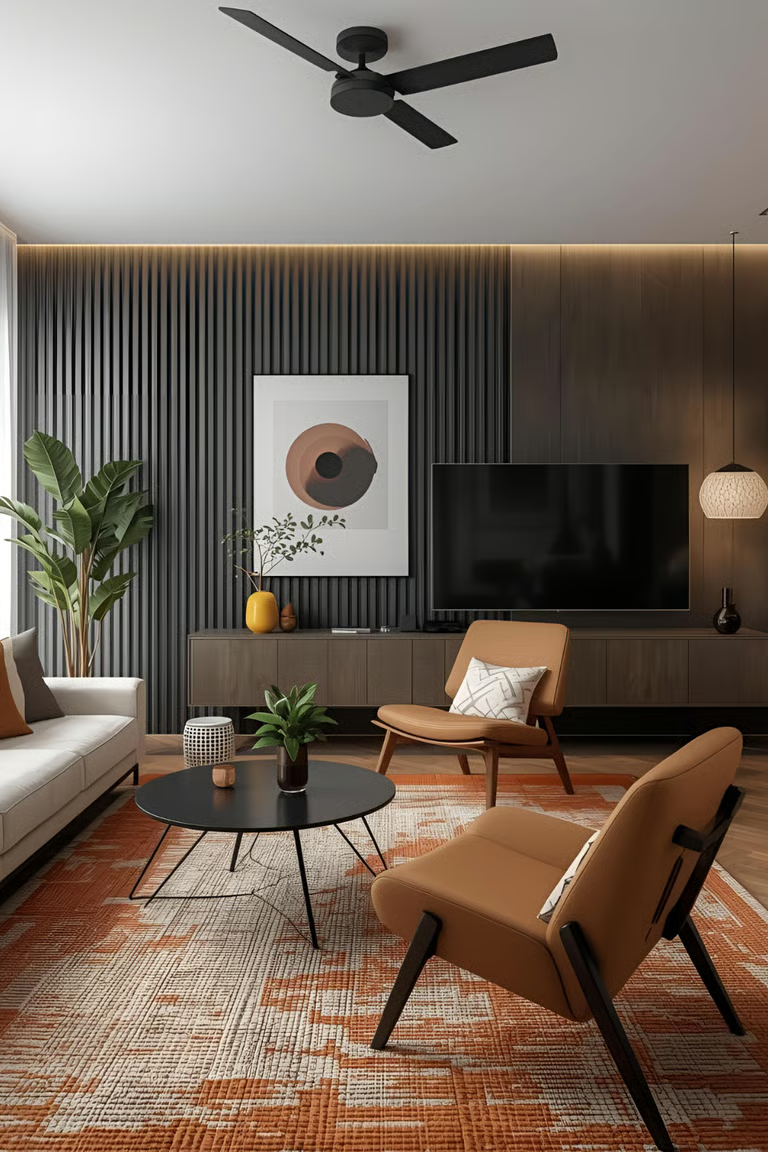
Trendy PVC TV Unit Design: The Complete Guide for Hall & Living Room
Walk into any freshly renovated Indian home today and you'll notice something. That heavy, old-style wooden TV cabinet everyone grew up with is quietly disappearing. In its place is a sleek, wall-hugging PVC TV unit design that looks far more expensive than it actually is, and shrugs off humidity, termites, and years of daily wear without a fuss.
If you've searched for pvc tv unit design, pvc panel tv unit design, or tv unit pvc design and kept landing on the same five recycled points, this guide is built to go further. We're covering real design styles, honest pricing per square foot, panel specifications most articles never mention, Vastu placement rules for the hall, room-by-room sizing, maintenance, common mistakes, and how a professional contractor actually helps you get it right the first time.
What Exactly Is a PVC TV Unit?
A PVC TV unit, sometimes searched as tv unit pvc, pvc tv cabinet design, or simply pvc tv design, is furniture built using rigid PVC (polyvinyl chloride) boards or PVC foam sheets instead of plywood, MDF, or solid wood. It could be a wall-mounted panel, a floor-standing cabinet, or a full media wall. The material itself is a synthetic polymer, which is exactly why it resists moisture, never rots, and stays completely untouched by termites, something a traditional wooden tv unit simply cannot promise.
Most pvc tv unit design for hall and living room pvc tv unit design projects actually use two related materials together, and this is where the tv unit design pvc panel and tv unit design pvc sheet searches usually get mixed up:
- PVC foam board (the pvc sheet tv unit): a lightweight, closed-cell board (commonly available in 6mm, 8mm, 12mm, 15mm and 18mm thickness) used for the main cabinet body, shelves, and doors. This is the core material behind most pvc furniture tv unit design and pvc furniture design for tv unit builds.
- PVC louvers or fluted panels (the tv unit pvc panel design): thin, grooved wall panels used purely as the backdrop wall around the TV, adding texture without adding weight.
Knowing this difference matters. A lot of searches for pvc sheets for tv unit or pvc design for tv unit lead to confusing content online, where some articles only talk about wall panelling and others only about cabinet furniture, without ever explaining that a complete tv unit design with pvc panel usually needs both working together.
Why PVC Is Winning Over Wood and MDF?
Most blogs will tell you PVC is durable and affordable, and then stop right there. Here's the fuller picture, based on how the material genuinely performs inside Indian homes:
The honest verdict: if you live in a coastal city, a monsoon-heavy region, or simply want a TV unit you never have to think about again, PVC wins outright. If budget isn't a constraint and you want an heirloom-quality piece, solid wood still has the edge, but for most Indian households, PVC now delivers the smarter value-for-money decision.
10 Types of PVC TV Unit Design You Can Choose From
Here are ten distinct directions you can take a pvc tv unit design in, from simple and budget-friendly to bold and statement-making.
1. Modern Minimalist PVC TV Unit Design
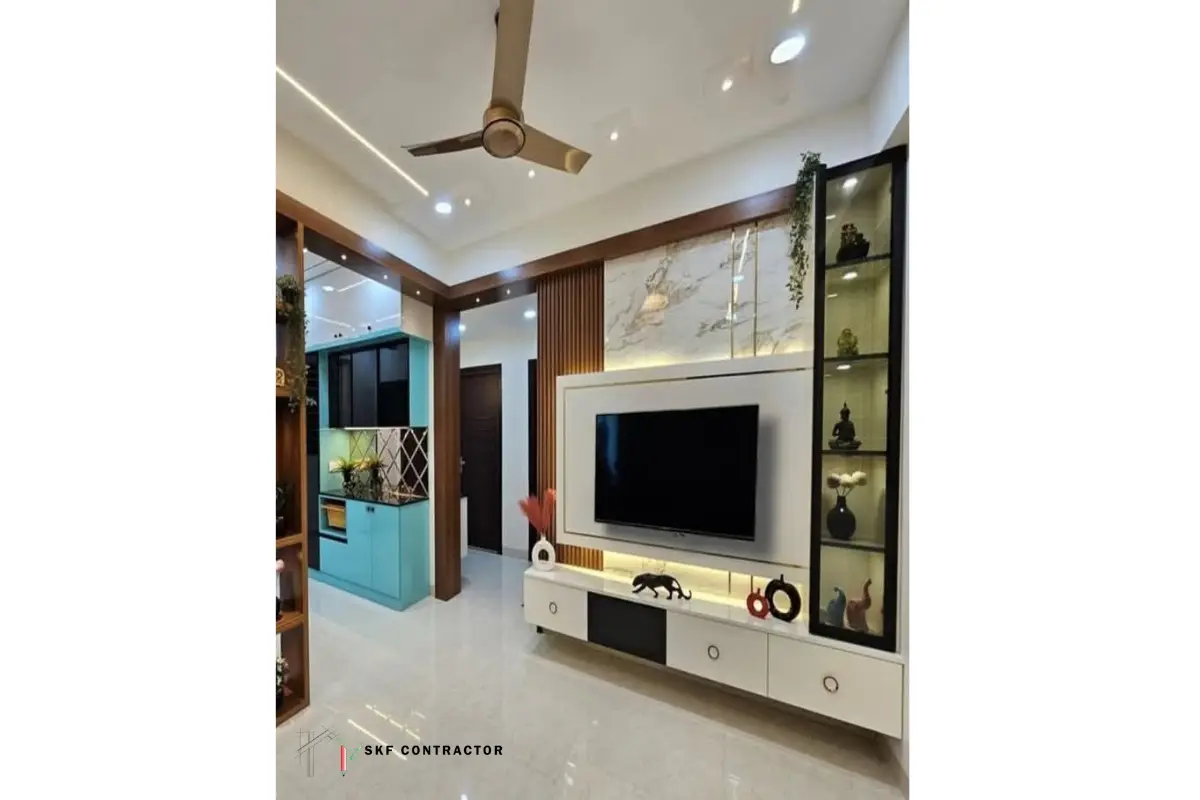
Clean horizontal lines, a floating wall-mounted structure, and no visible legs at all. This is the most searched style under simple pvc tv unit design for hall, and it suits small to mid-sized halls where floor space is precious. A single accent light strip underneath makes it look striking even in low light, and it remains one of the more requested simple pvc tv unit design layouts for first-time buyers.
2. Glossy High-Shine PVC Panel TV Unit
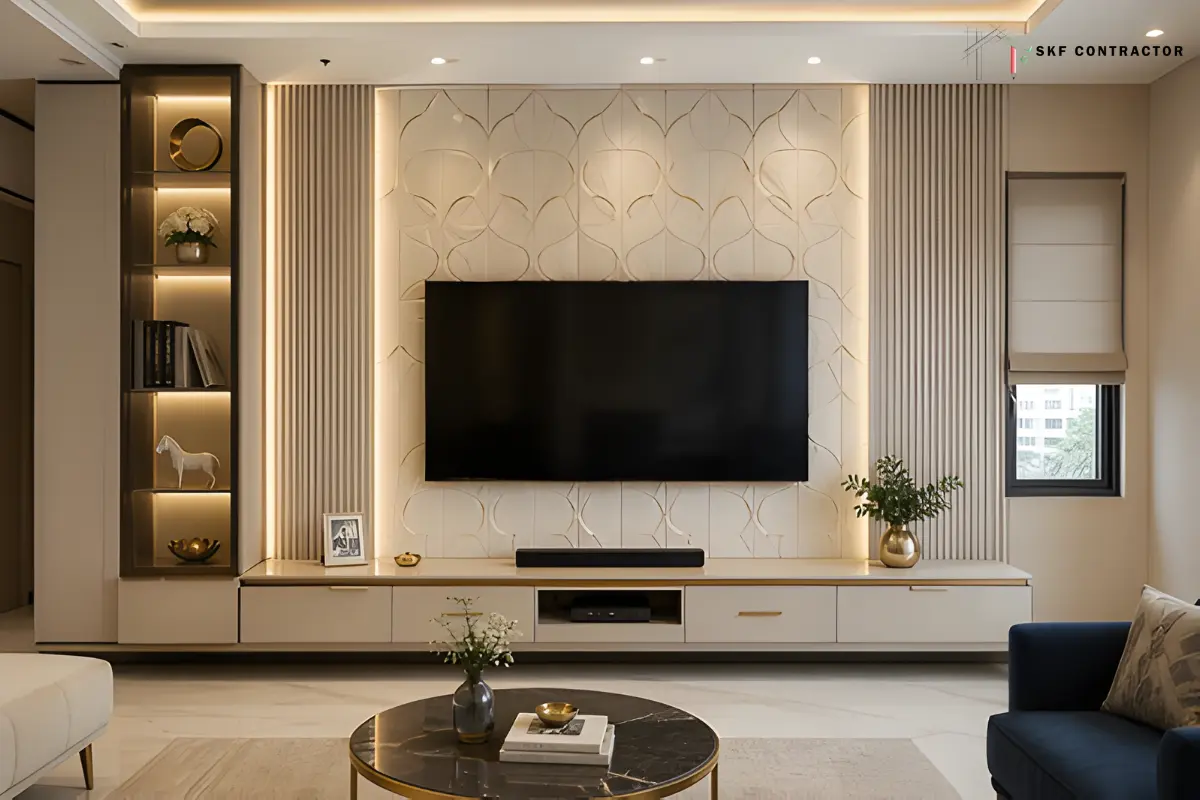
High-gloss PVC panels, usually in white, grey, or a bold single colour, paired with LED backlighting behind the panel. When the TV is switched off, the soft glow around it instantly lifts a plain hall. Integrated LED lighting has become a near-standard request in new tv unit pvc panel design orders.
3. Wood-Finish PVC TV Unit
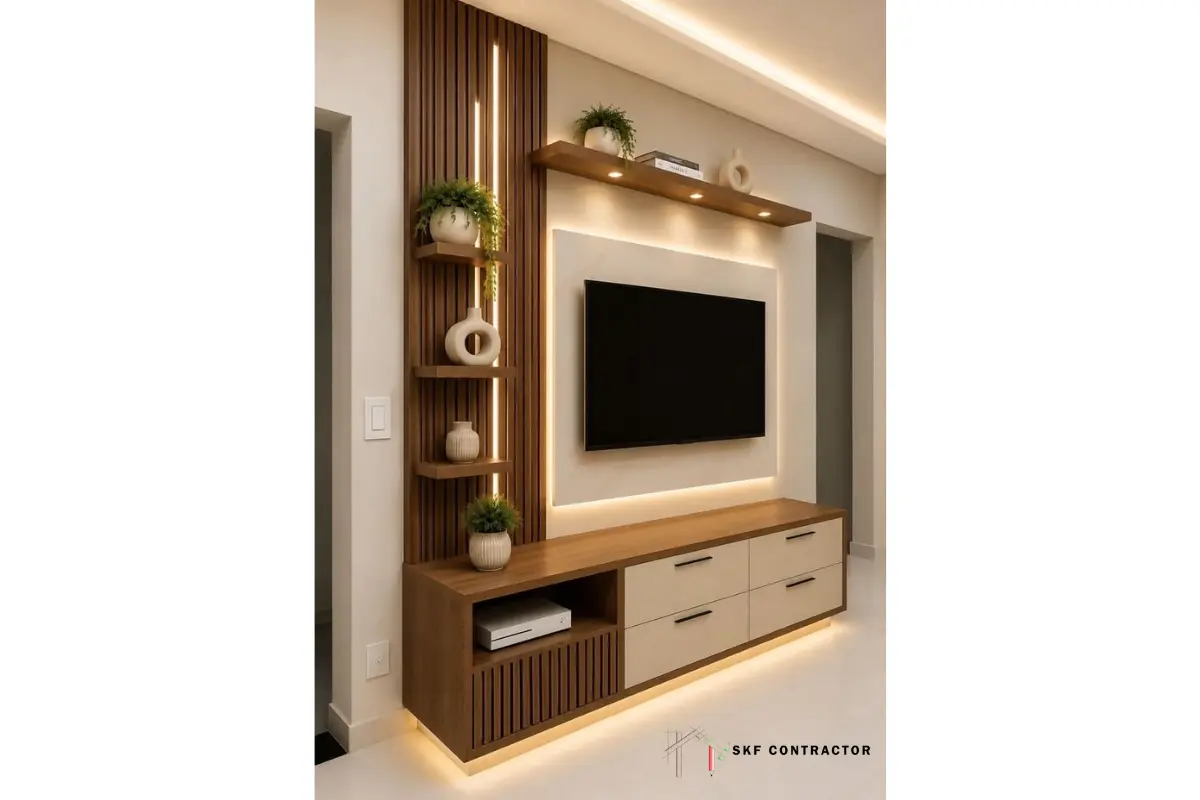
This is a design most competing blogs never explain properly. PVC sheets today are digitally printed with wood-grain textures so realistic that most guests can't tell the difference from real wood at arm's length. You get the warmth of a wooden tv unit design with the moisture resistance of PVC, ideal for families who want a cosy hall without wood's maintenance headache.
4. Fluted or Louver PVC TV Unit Design
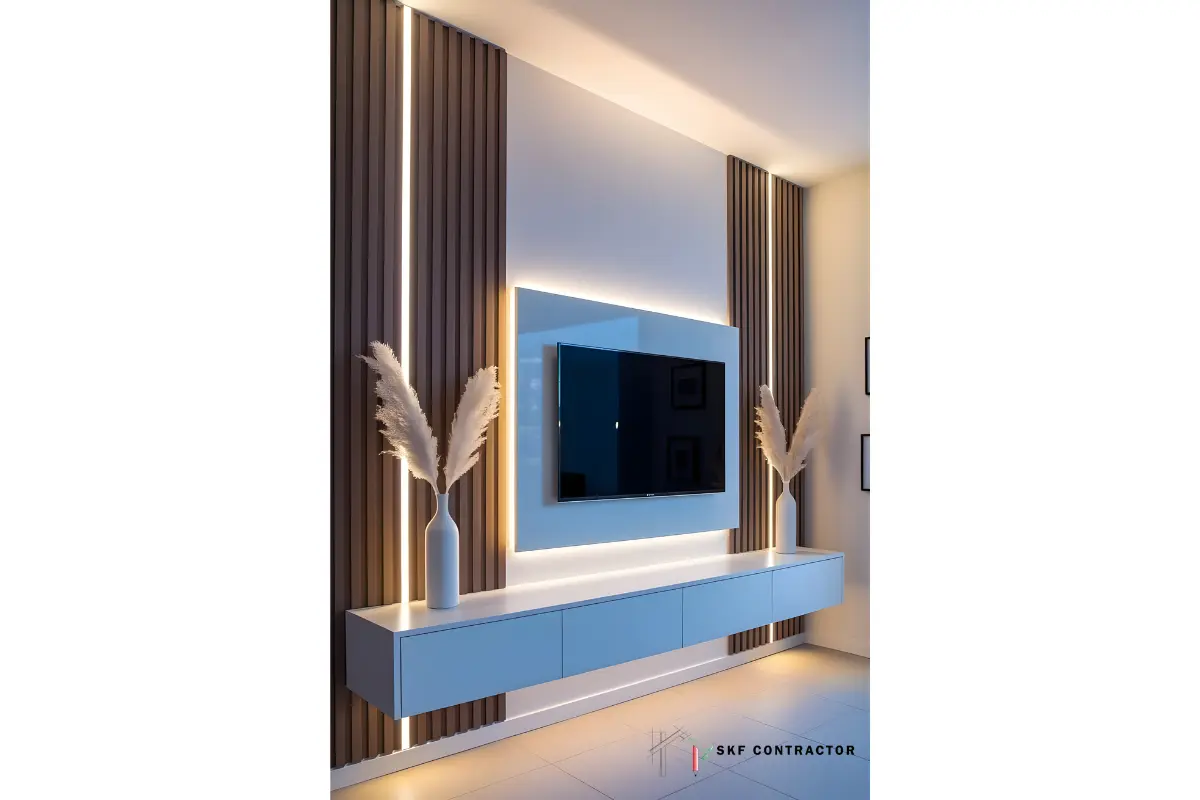
Vertical grooved PVC panels used as a backdrop, often combined with a floating console below. The grooves catch ambient light and add visual depth without any clutter, a look borrowed from luxury hospitality interiors and now common even in compact 2BHK apartments.
5. Textured 3D PVC TV Panel Wall
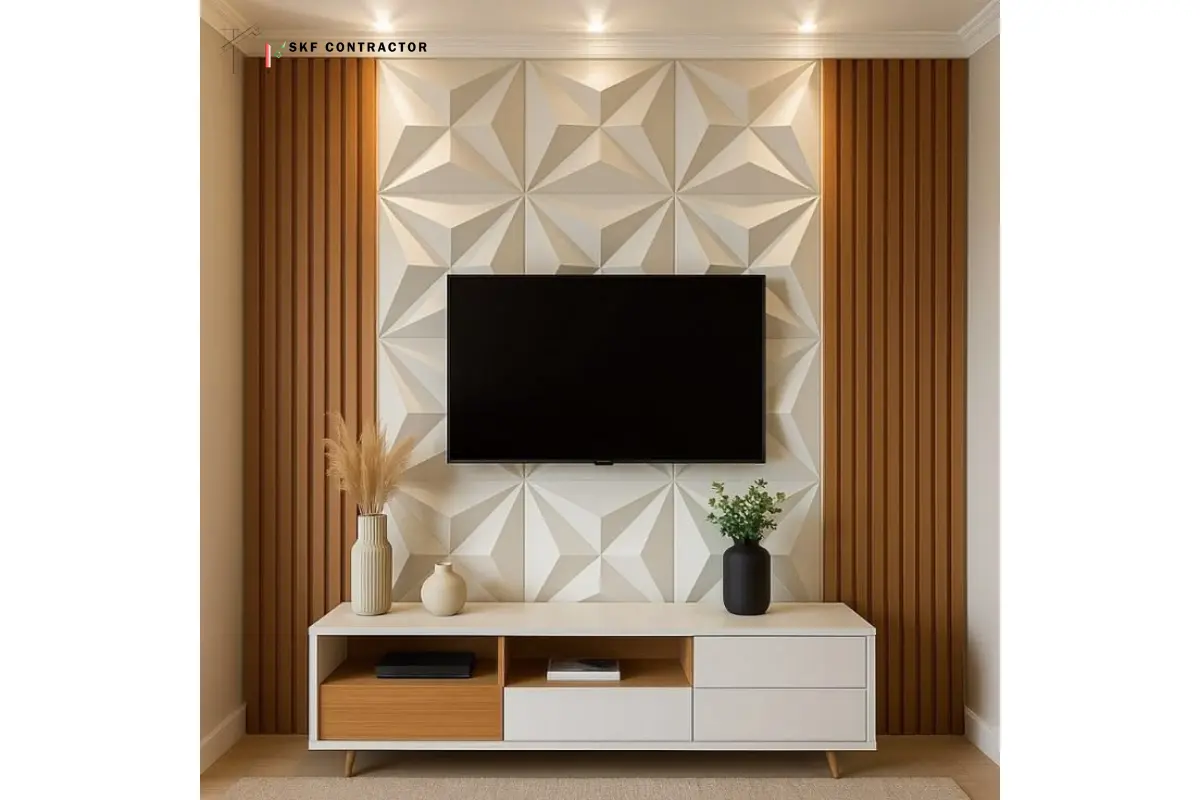
Instead of a standalone unit, the entire wall becomes the design feature using 3D-textured PVC panels, with the TV mounted flush on top. This is where the traditional idea of a tv unit pvc furniture design evolves into a complete media wall.
6. Neutral and Understated PVC TV unit
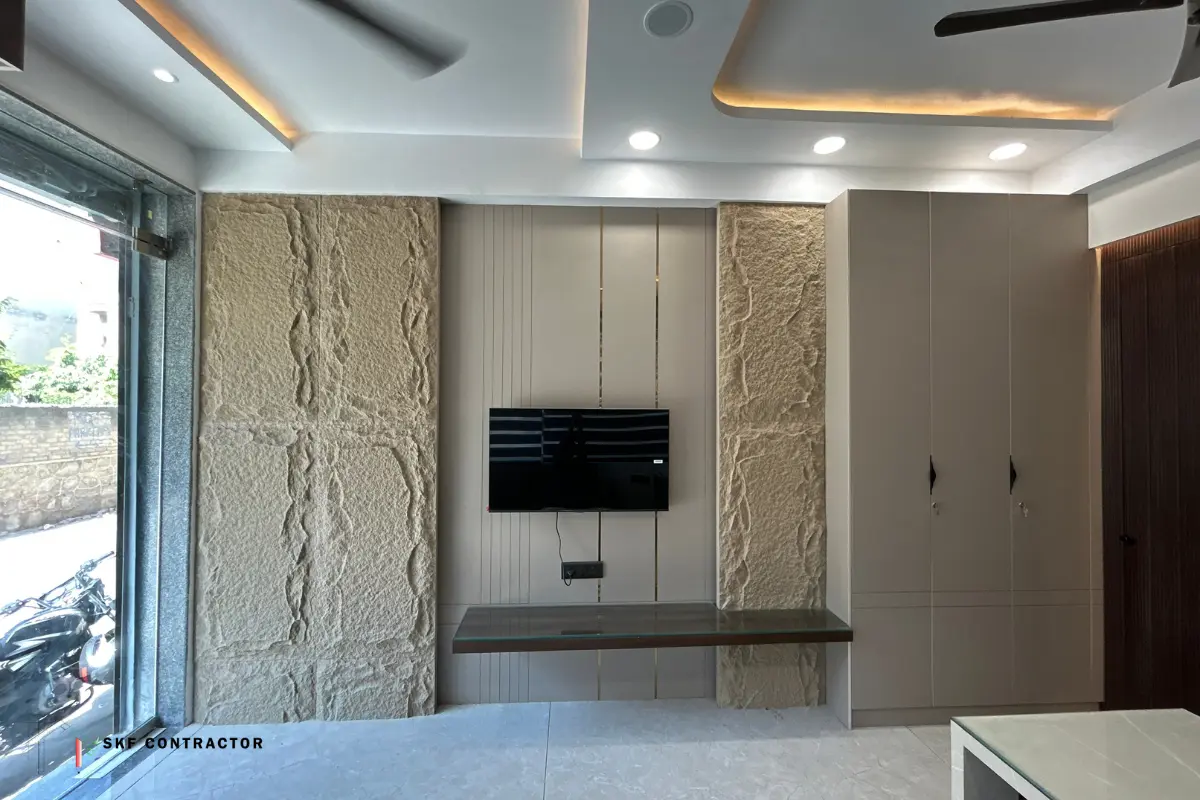
A plain, single-tone PVC cabinet with closed storage and minimal detailing. Best for homeowners who want function over flair, and usually the most economical pvc tv unit design for living room spaces on a tight budget.
7. Floating Wall-Mounted TV Unit with Open Shelves
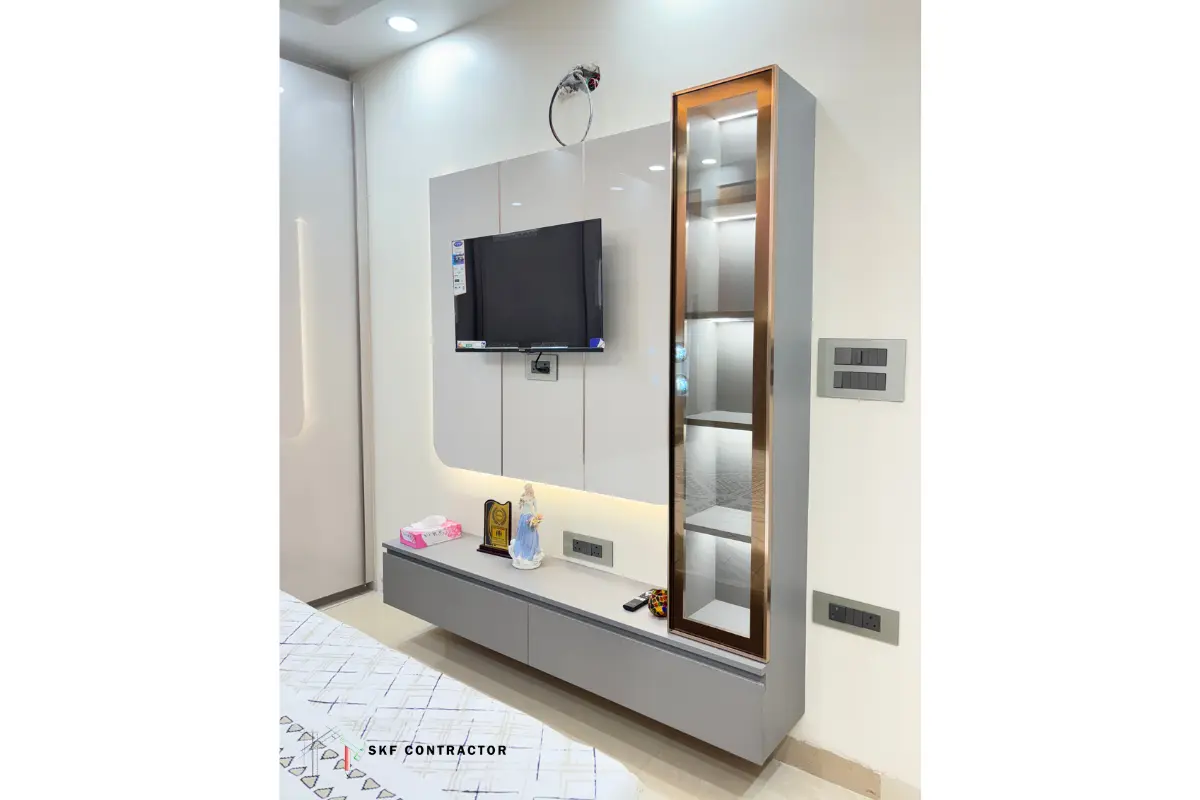
A slim, wall-hung PVC console with open shelving instead of closed doors, perfect for displaying decor pieces or keeping the remote and set-top box within easy reach. It works particularly well in rental homes since it avoids heavy drilling into the floor.
8. L-Shaped or Corner PVC TV Unit Design
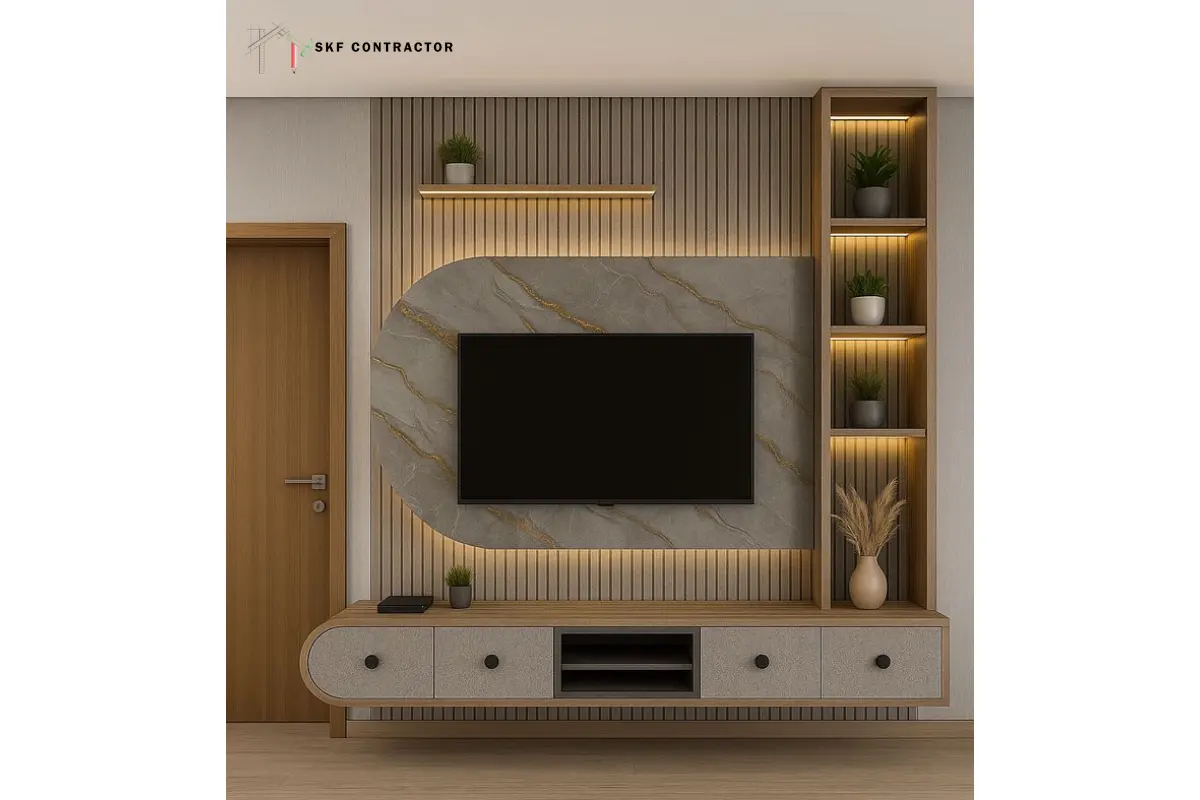
Built specifically for corner walls, this design wraps around the angle of the room and is a smart pick for smaller halls where a straight unit would eat up too much usable floor space.
9. Two-Tone Colour-Blocked PVC TV Unit
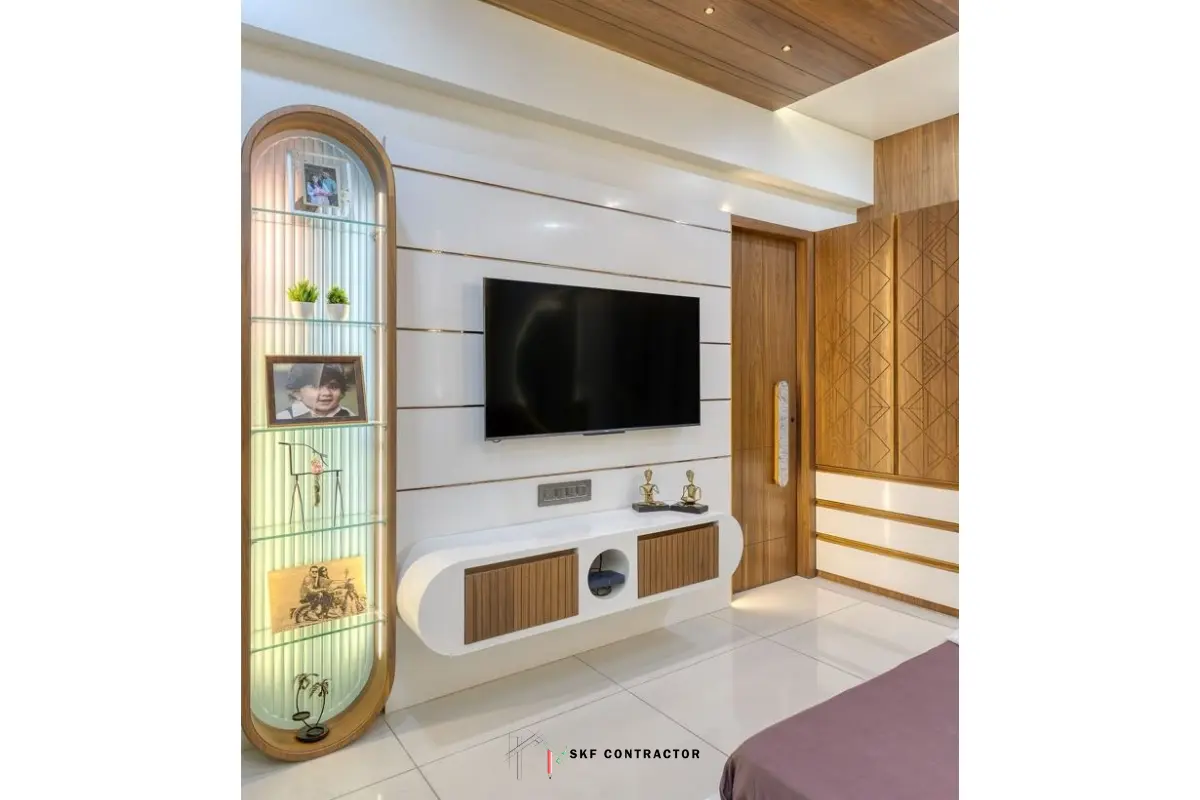
Two contrasting PVC finishes, such as matte black paired with warm wood-tone, or soft grey with a muted olive, used together on the same unit. This adds personality without needing bold, loud colours across the whole wall.
10. Multi-Purpose PVC TV Unit with Study or Display Combo
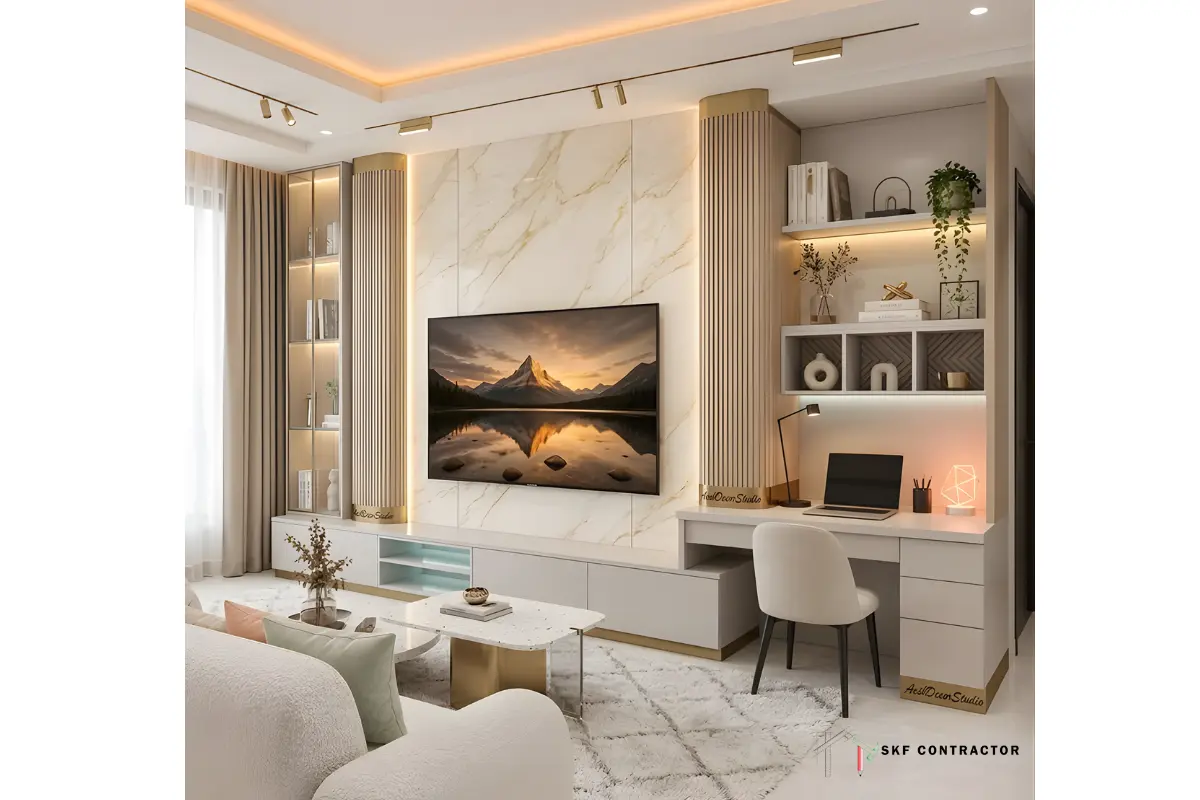
A single unit that houses the television on one side and a small study nook, bar shelf, or display counter on the other. This is increasingly popular in compact apartments where the hall has to double up as more than just a viewing space, and it's a favourite among buyers searching for a living room pvc tv unit design that saves space.
A Quick Word on Terminology: PVC TV Design, TV PVC Design and Similar Searches
If you’ve come across slightly different phrasings while researching, such as pvc t v unit design, tv pvc design, or pvc tv design, know that these all point to the same idea. Search habits vary from person to person, some type it as pvc tv unit, others as tv unit pvc, tv unit pvc sheet, or pvc sheets for tv unit, but the underlying product and the buying decision behind it stay identical. Whether you started out looking for a simple pvc tv unit design for hall or a full tv unit design with pvc panel, what actually changes the outcome is the panel grade, the finish, and the installer you choose, not the exact words used to search for it.
PVC TV Unit Design for Hall: Size and Layout Guide
A detail almost no blog on this topic bothers to include is practical sizing. Here’s a simple way to think about it:
- Small hall (up to 120 sq. ft.): A wall-mounted unit no wider than 5 to 6 feet works best. Skip floor cabinets, as they visually shrink the room.
- Medium hall (120 to 200 sq. ft.): A combination unit, a floating console plus a side storage tower, balances storage with openness.
- Large hall (200+ sq. ft.): A full media wall with mixed textures, PVC combined with metal inlay or wood-look strips, becomes the room’s centrepiece rather than just furniture.
- Standard mounting height: Keep the TV’s centre at eye level when seated, typically 40 to 42 inches from the floor for a standard sofa height.
- Ventilation gap: Leave at least 2 to 3 inches of clearance behind the panel if it houses a set-top box or gaming console, to prevent heat build-up, a small detail vendors rarely mention upfront.
Vastu Tips for TV Unit Placement in the Hall
Television and electronics fall under the fire element, Agni, in Vastu Shastra, so placement genuinely matters to many Indian families, yet almost no PVC furniture blog touches this subject. Here’s a clear, practical summary:
- Best direction: The Southeast wall of the hall is considered ideal, since it aligns with the fire element that governs electronic appliances.
- Acceptable alternatives: East or North walls work well if Southeast isn’t structurally possible.
- Directions to avoid: Northeast, considered a sacred and clutter-free zone, and the exact centre of the room, known as the Brahmasthan, should never house the TV unit.
- Seating direction: Ideally, viewers should face North or East while watching TV for better energy balance.
- Colour choice: Warm, grounding tones such as beige, light brown, muted wood-finish, or soft earthy shades are considered more favourable than harsh, cold colours.
- Avoid mirrors: Don’t place a mirror directly facing or behind the TV unit, as in Vastu this is believed to reflect restless energy back into the room.
- Keep it ventilated and clutter-free: Both Vastu and practical furniture care agree here. An overcrowded, poorly ventilated TV unit isn’t good for energy flow or for your electronics.
Even if you don’t follow Vastu strictly, many of these principles, ventilation, avoiding glare from mirrors, and choosing a wall with good natural light, overlap with good interior design sense anyway.
How Much Does a PVC TV Unit Cost in India?
Pricing depends on the city, panel thickness, and finish, but here is a realistic, current breakdown:
For comparison, WPC panelling typically runs Rs. 180 to Rs. 350 per sq. ft. and MDF panelling Rs. 120 to Rs. 250 per sq. ft., which means PVC remains the most budget-friendly panel material on the market by a clear margin. Expect to pay 10 to 20 percent more in metro cities like Mumbai, Delhi-NCR, and Bengaluru due to higher labour costs.
A tip most vendors won’t volunteer: always ask whether the quoted rate is for panel only, or panel plus installation plus hardware such as hinges, channels, and an LED driver if applicable. Many low quotes quietly exclude labour, and the final bill can end up 20 to 30 percent higher than expected.
Panel Thickness and Grade: What the Number on the Invoice Actually Means
This is a detail almost entirely missing from competing content, and it’s the single biggest factor in how long your unit lasts:
- 6mm to 8mm PVC foam board: Used only for door shutters or decorative backing, not strong enough for load-bearing shelves.
- 12mm PVC foam board: The most common thickness for cabinet bodies and shelving in a standard tv unit pvc design.
- 15mm to 18mm PVC foam board: Used for larger units or shelves meant to hold heavier electronics like soundbars or gaming consoles.
- Density matters more than thickness alone: A denser, higher-density PVC board resists sagging over time better than a lighter board of the same thickness. Always ask your fabricator for the density rating, typically measured in kg per cubic metre, not just the millimetre count.
Maintenance: A Simple Schedule Nobody Publishes
- Weekly: A dry or slightly damp microfiber cloth wipe. Never use abrasive scrubbers.
- Monthly: Check hinges and drawer channels for dust build-up. A drop of silicone lubricant keeps movement smooth.
- Every 6 months: Inspect edges and joints for any lifting of the edge banding, especially during high-humidity months.
- Avoid: Direct heat sources nearby, like a wall-mounted heater. PVC handles humidity beautifully, but prolonged direct heat over many years can cause minor warping.
Common Mistakes to Avoid When Choosing a PVC TV Unit Design
- Choosing purely on Pinterest photos without checking whether the panel thickness suits your TV size and accessories.
- Ignoring cable management at the design stage. Retrofitting cable channels later is messy and often impossible with PVC.
- Going too glossy in a small, brightly lit room, since high-gloss finishes can cause glare that interferes with actual viewing.
- Not checking the installation warranty. A good vendor should offer at least one year on fitting and hardware, separate from the material warranty.
- Overlooking weight limits, since heavy soundbars or décor items on open PVC shelving can cause long-term sagging if the board thickness wasn’t chosen correctly.
PVC TV Unit Design Trends for 2026
- Media walls replacing bulky cabinets: lower-profile, wall-integrated designs that feel like architecture rather than furniture.
- Fluted and grooved textures: vertical grooves that add a premium look without ornamentation.
- Mixed-material designs: PVC combined with metal accents or wood-look inlays for a layered backdrop.
- Soft, curved edges: rounded corners replacing sharp, boxy silhouettes.
- Eco-conscious PVC: recycled PVC and low-VOC finishes are gaining ground as buyers become more environmentally aware.
How SKF Contractor Can Help You Build the Right PVC TV Unit ?
Reading about panel thickness and Vastu directions is useful, but turning that knowledge into an actual TV unit on your wall is a different job altogether, and that’s exactly where SKF Contractor steps in. Instead of picking a random catalogue design and hoping it fits your hall, the team sits down with you first, understands your room size, your TV dimensions, your storage needs, and even your Vastu preferences, and only then suggests a design that genuinely works for your space rather than a generic template.
What really sets the experience apart is the honesty around materials. SKF Contractor will tell you upfront which panel thickness and density your unit actually needs, instead of upselling a premium grade you don’t require or quietly using a thinner board to cut costs. Every quote is broken down clearly between material, labour, and hardware, so there are no surprise additions on the final bill. From the first site visit to measuring, design finalisation, fabrication, and on-site installation, the entire process is handled end to end, with a proper installation warranty backing the work.
If you’re anywhere in the planning stage of a pvc tv unit design for your hall or living room, whether it’s a simple wall-mounted unit or a full media wall with backlighting, reaching out to SKF Contractor for a site visit and quote is a straightforward way to move from Pinterest inspiration to an actual finished wall you’ll enjoy looking at every single day.
Final Thoughts
A well-planned PVC TV unit design isn’t just about picking a pretty finish from a catalogue. It’s a balance of panel thickness, ventilation, Vastu-friendly placement, and an honest cost comparison against MDF and wood. Get those fundamentals right, and a PVC unit will comfortably outperform far more expensive materials in everyday durability, while still giving your hall or living room the polished, modern look you’re after.
Whether you’re going for a simple pvc tv unit design for a compact hall or a full glossy media wall for a large living room, the smartest move stays the same. Understand the material specifications, ask the right questions before you order, and choose a design that suits both your space and your family’s daily life, not just what looks good in a photograph.
Planning your own PVC TV unit design? Get at least two or three vendor quotes, always ask for the panel density and thickness in writing, and request a physical finish sample before finalising your order
Frequently Asked Questions