
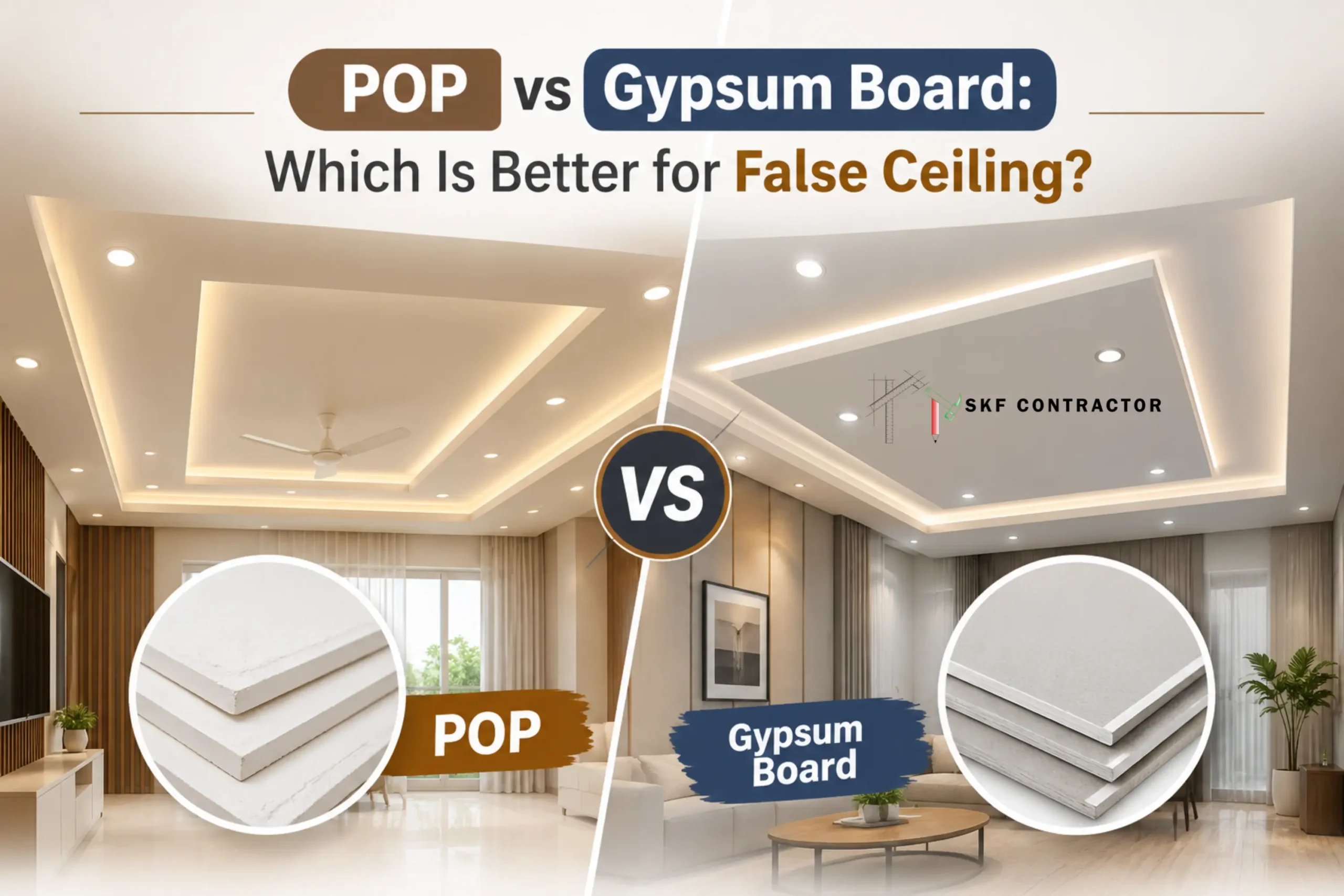
POP vs Gypsum Board: Which Is Better for False Ceiling?
Summary:-
What Is POP (Plaster of Paris)?
What Is a Gypsum Board?
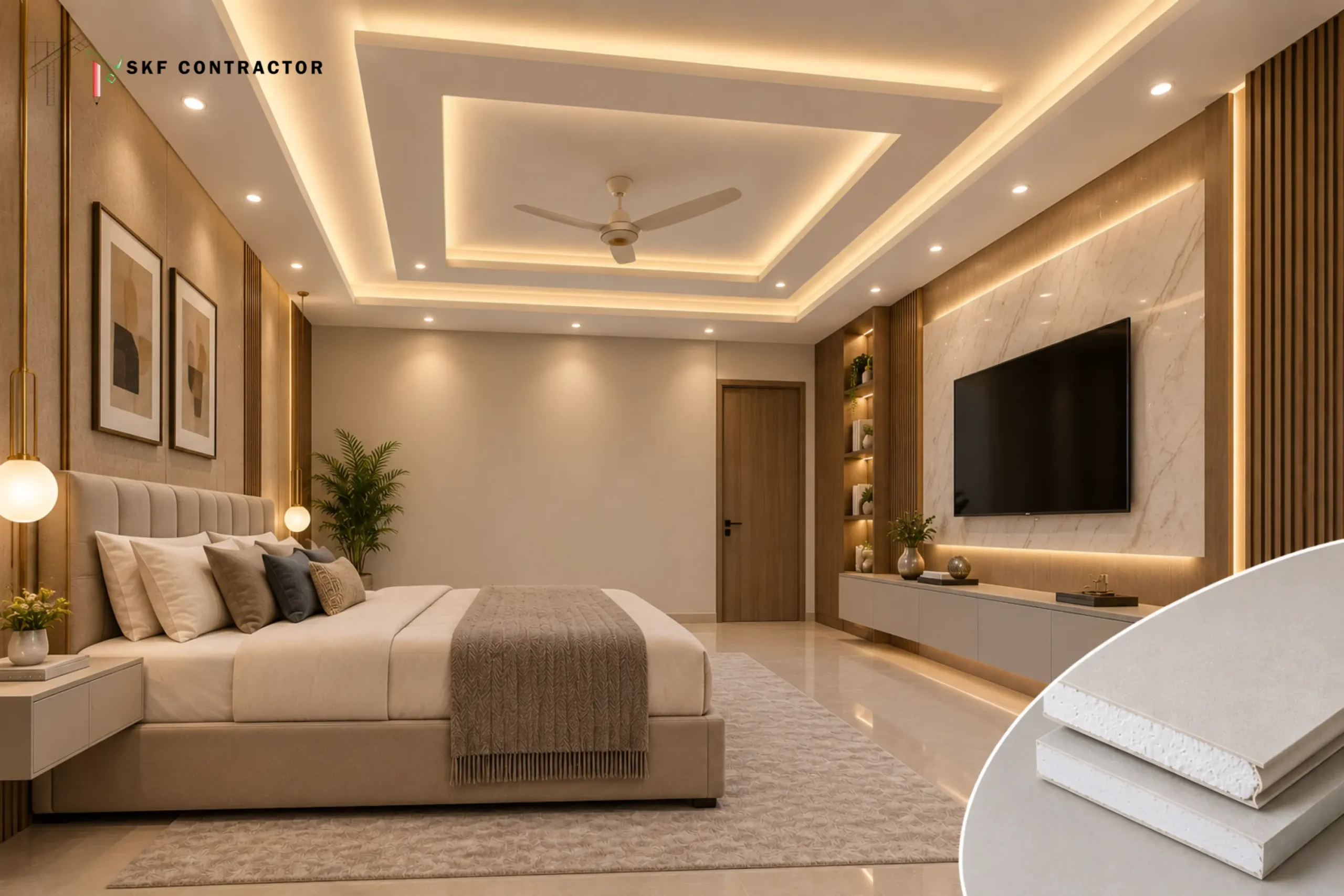
A gypsum board is a panel constructed of a gypsum core between two sheets of heavy paper. The sheets are conventional sizes and thicknesses and are screwed to a galvanized steel frame attached to the ceiling. The joints between the sheets are filled with tape and putty, sanded smooth, and then painted. The material is produced under controlled settings so the quality is the same from one sheet to the next.
The best thing about a gypsum board ceiling is the speed and neatness. There is significantly less mess, as there is no wet mixing on site, and an entire room may frequently be completed in a couple of days. Gypsum boards also come in moisture-resistant and fire-resistant variants, which makes them perfect for kitchens, baths, and commercial areas where ordinary boards might not last.
POP vs Gypsum Board: Key Differences
When you compare pop and gypsum board side-by-side, the distinctions appear in how the material is created, installed, and maintained. Key considerations to think about before you make your decision:
Cost Comparison
The first thing people normally question is how much it will cost. The answer depends on the design. POP is often a bit cheaper in terms of material for a simple flat ceiling, because the raw powder is cheap. However, the labor cost for POP may be higher because the work is slow and manual and requires a competent finisher. If the pop ceiling design is intricate with curves and carved features, the labor cost can quickly escalate.
Gypsum board is often more costly to purchase, but the faster installation cuts down on labor time and cleanup costs. And when you also factor in the reduced likelihood of repairs, many homeowners feel gypsum board offers more value over the long haul. Prices will also depend on the city, brand, thickness of the board, and how much illumination and detail you want, so always get a formal price with a clear scope of work before you start.
Durability and Finish
A nicely manufactured POP surface will last for many years, but it is not tolerant to moisture and structural movement. Leaks from the floor above, humid weather, or inadequate mixing can produce discoloration, flaking, and cracking. Repairs are possible, although sometimes patchwork on a pop roof design might remain visible even after repainting, especially if light colors are used.
Gypsum board comes out of the box with a flatter, more even finish, and that’s why it’s preferred for modern interiors. The joints may be disguised neatly, and the surface accepts paint quite well. The main weakness is water. If a standard board gets wet repeatedly, it might sag or go soft; therefore, choosing the proper grade of board in damp locations and addressing any leaks at the source is crucial if the outcome is to last.
POP Ceiling Design and POP Roof Design Ideas
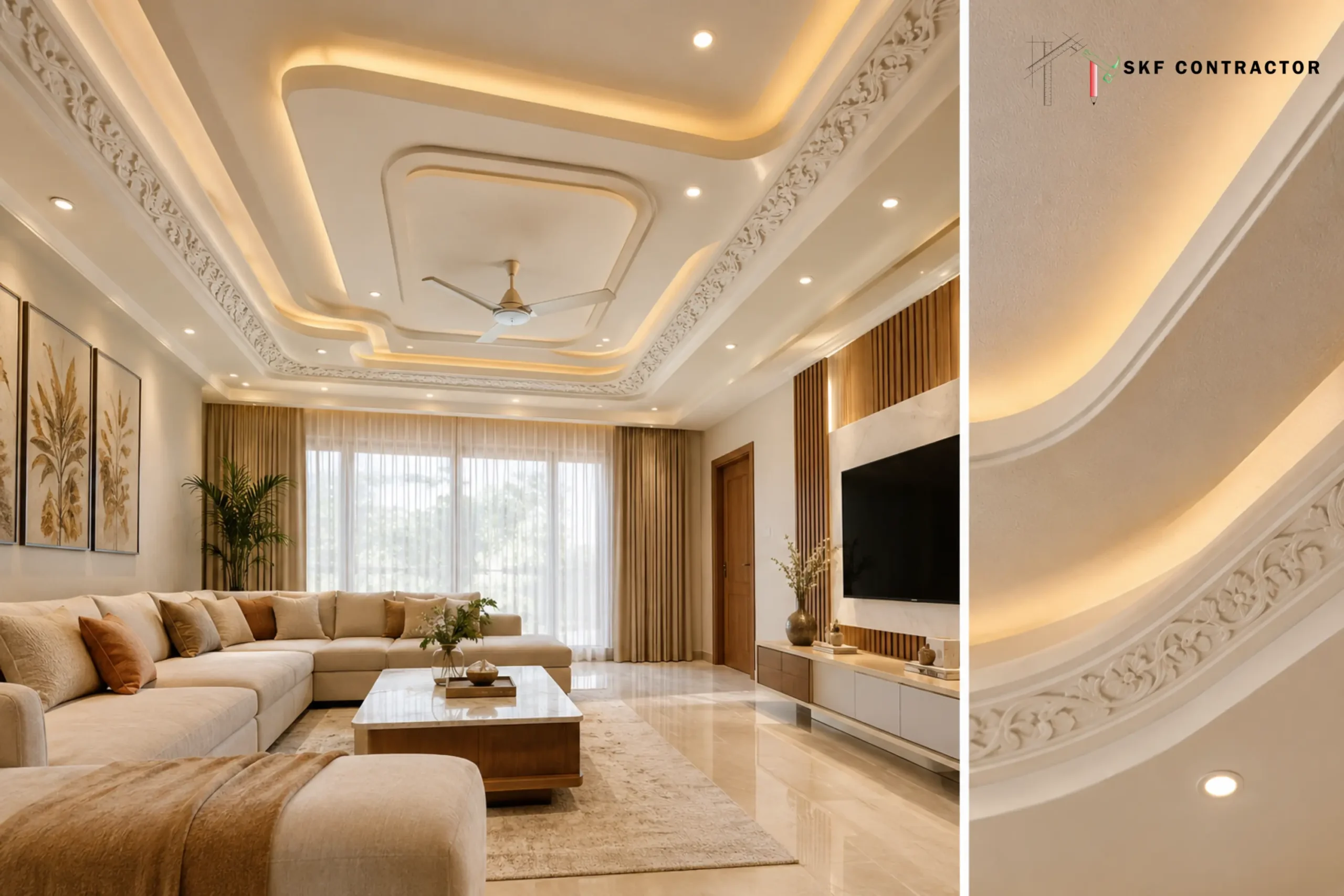
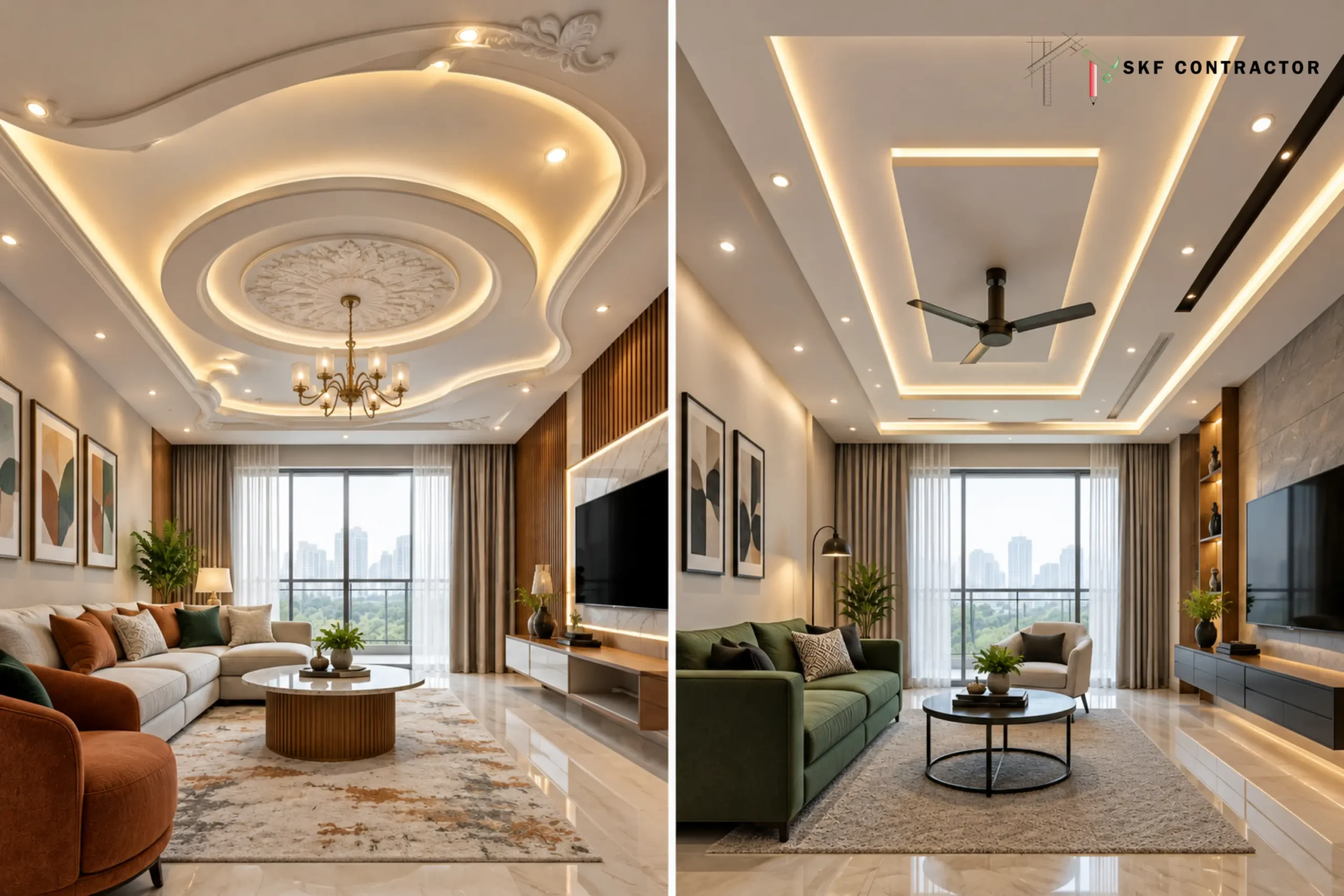
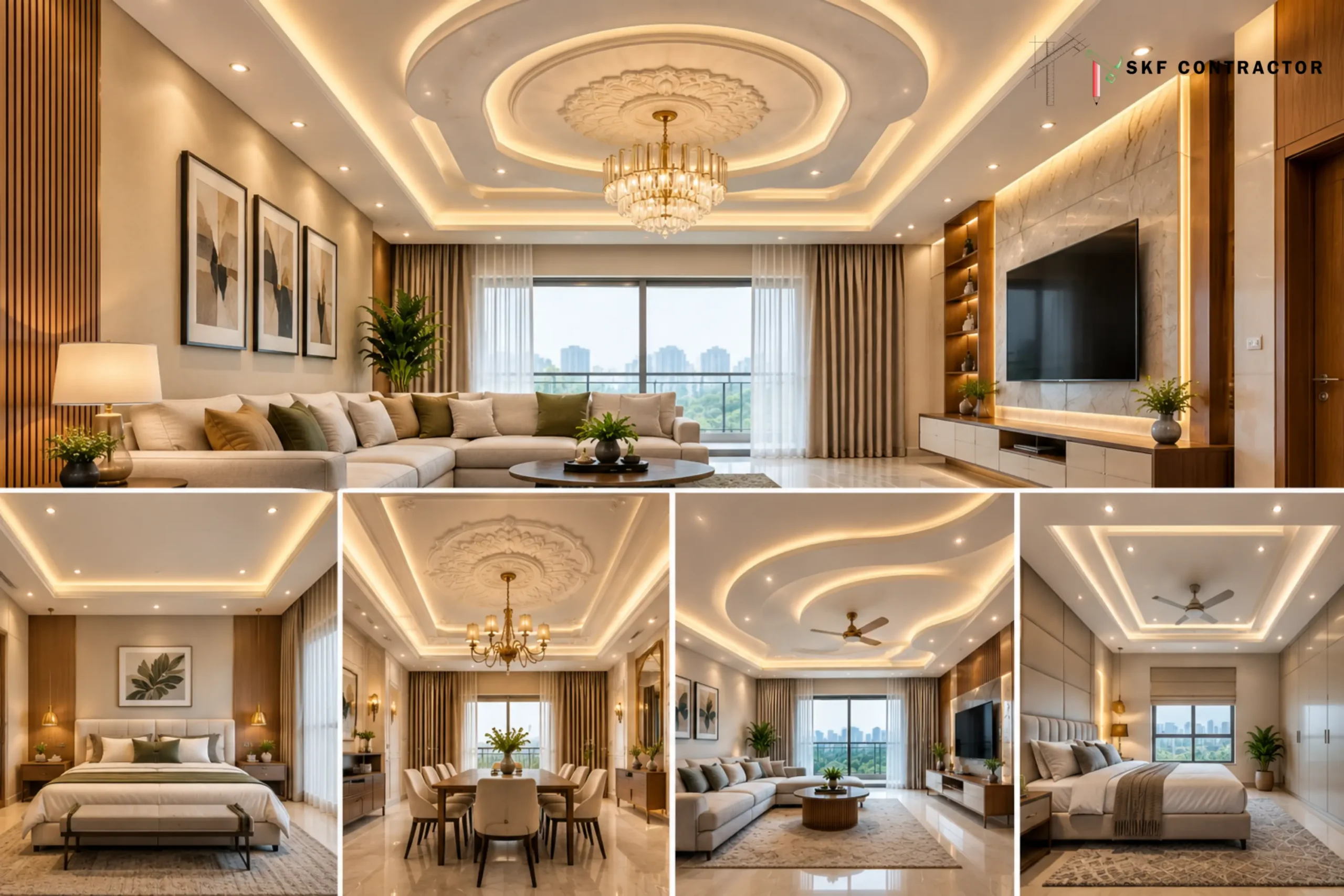
POP gives you a lot of flexibility to be creative if you appreciate the classic, hand-crafted design. Some common ideas that work well in living rooms, bedrooms, and dining rooms are:
Gypsum Board Ceiling Design Ideas
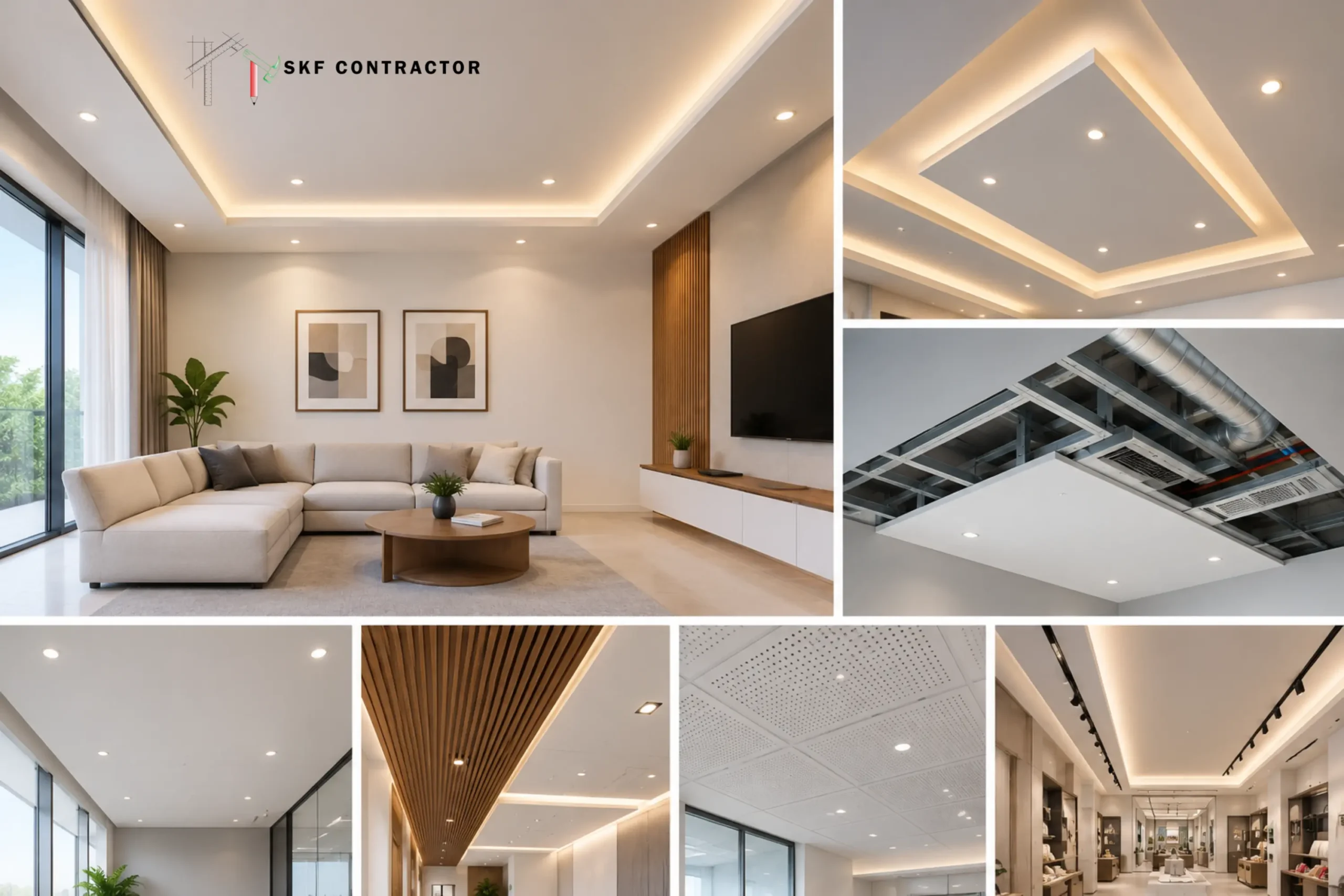
Gypsum board is preferred for clean, contemporary environments. Ceiling designs using gypsum board might be as simple as a flat white ceiling with a few spotlights or as intricate as a multi-level ceiling with a peripheral cove, a floating panel effect, and concealed lighting. The sheets are straight and exact; that is why they look outstanding in minimalist, Scandinavian, and modern luxury homes. They are also the top choice for offices, clinics, showrooms, and retail stores.
Another giant plus is that drywall may elegantly conceal wires, ducts, and air-conditioning lines above the ceiling. You can also blend materials such as a gypsum ceiling with wooden strips, metal profiles, or acoustic panels to give the area a more unique character. The flexibility allows you to coordinate the ceiling with your house or workspace’s décor.
Which Is Better for Your Space?
There’s no clear winner in the pop vs. gypsum board debate. What’s right for you depends on your area, price, and style. If you desire a very ornamental, traditional, or custom-shaped ceiling, and you have access to a talented craftsman, POP can give a lovely effect. It also works wonderfully for minor repair jobs and blending into an existing POP ceiling.
Gypsum board is the safest and most practical option for most modern residences, villas, and offices. It delivers a clean finish, quicker completion, and better uniformity, and it accommodates lighting layouts and air-conditioning needs without much effort. If you are not certain, you can also mix both, where gypsum board is the main ceiling and POP is utilized exclusively for some selected ornamental accents.
Common Mistakes to Avoid
Many of the ceiling problems stem from decisions that are made before the work even starts. Watch out for these typical blunders to ensure that your fake ceiling remains good looking for years to come:
How SKF Contractor Helps You
Having a good team of experienced professionals makes it easy to choose between a pop false ceiling and a gypsum board ceiling. The SKF Contractor will review your space size, ceiling height, lighting needs, and budget before recommending the correct material. Whether it’s a rich pop ceiling design for your living room or a streamlined gypsum board ceiling design for an office, the team maps out the layout first and offers a clear estimate, so there are no surprises later.
On the execution side, SKF Contractor uses excellent materials, proper framing, and expert workers to offer you a flawless, long-lasting finish. The team also handles electrical points, lighting, painting, and clean-up, so you don't have to coordinate with several contractors. If you are going for home renovation or business fit-out in Gurgaon, you can contact SKF Contractor for consultation and obtain realistic and honest guidance for your project.

Conclusion
Both materials belong in modern environments, and the optimal choice depends on what you value most. POP is the best option for intricate, handmade, and traditional designs. Gypsum board scores on speed, tidiness, and uniformity. Understanding the merits and weaknesses of each can help you avoid costly mistakes and end up with a ceiling that suits your lifestyle.